
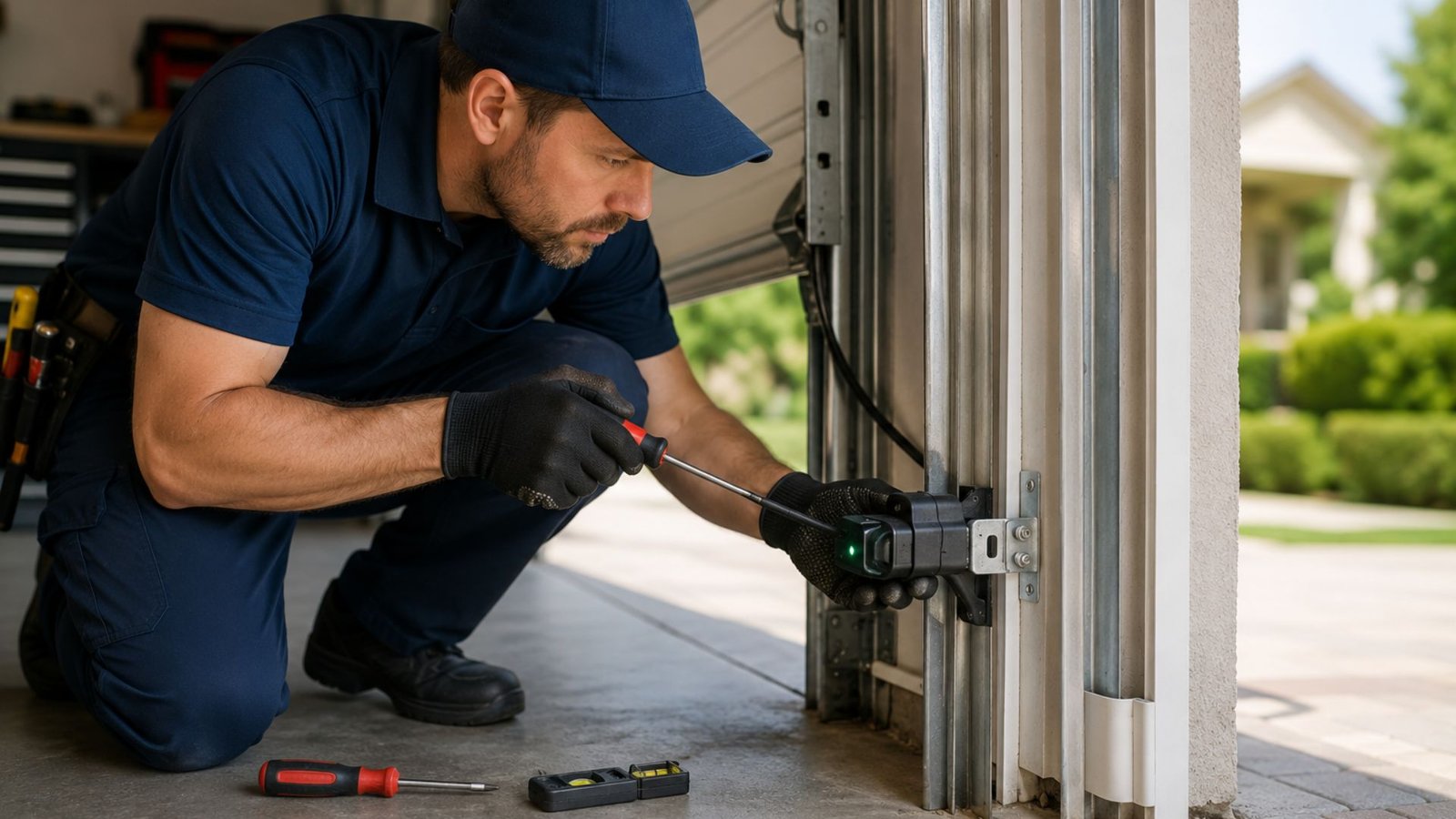

Smart Garage Door Safety Sensor Troubleshooting Tips To Fix Common Issues Fast
If your garage door refuses to close all the way or keeps reversing for no obvious reason, the safety sensors are usually the first place to look. These small devices do a big job – they send an infrared light beam across the bottom of the door opening to detect anything in the path of a closing door. When something interrupts that beam, the door stops or reverses to prevent injury.
The good news? Most sensor problems are surprisingly simple to fix once you know what to look for.
How Garage Door Safety Sensors Actually Work
Each garage door opener system uses two sensors mounted low on the door track. One sensor sends the infrared beam, and the other receives it. When the beam is unbroken, the door operates normally. When something blocks or misaligns that beam, the system shuts down the closing function as a safety measure.
Most sensors use indicator lights to tell you what is happening. A steady green light on the receiving sensor typically means the beam is aligned. A blinking or red light usually signals a problem.
Common Causes of Safety Sensor Problems
Misalignment
This is the most frequent culprit. Even a minor bump or vibration can knock one sensor out of position, causing it to miss the beam entirely. You may notice the garage (residential) door going down a few inches and then reversing, or the opener light flashing repeatedly.
Gently realign the sensors by loosening the wing nut, adjusting the sensor bracket until the indicator light turns solid, and retightening. It takes less than five minutes and requires no special tools.
Debris or Dirt on the Lens
The sensor lens is small and low to the ground, which makes it a magnet for dust, cobwebs, and debris. Even a thin layer of dirt can scatter the infrared signal enough to trigger a false reading.
Wipe each lens gently with a clean, soft cloth. Avoid abrasive materials that could scratch the surface. This quick cleaning step solves the problem more often than people expect.
Sunlight Interference
Direct sunlight shining into the receiving sensor can overwhelm the infrared signal. This tends to happen at certain times of day when the light beam and the sun align. If your sensor issue only occurs in the morning or late afternoon, this is likely the cause.
A simple fix is to shade the sensor with a small piece of cardboard or reposition it slightly. Some homeowners also use sensor sun shields, which are available at most hardware stores.
Moisture and Corrosion
Humidity and moisture are real concerns, especially in areas with warm and wet climates.
Moisture can corrode the wire connections at the sensor or cause short circuits that disrupt the signal entirely.
Inspect the wiring at each sensor for fraying, rust, or loose connections. If you find damaged wire, replacing it is a straightforward repair – but if the problem extends to the opener unit or circuit breaker, it is worth calling a professional.
Step-by-Step Sensor Troubleshooting Guide
Start with the simplest checks before assuming you need parts or professional help.
- Check the indicator lights – A blinking light on either sensor is your first clue that something is off.
- Look for visible obstructions – Remove any debris, tools, or objects near the sensor path.
- Clean the lens – Wipe both sensor lenses carefully with a dry cloth.
- Check alignment – Make sure both sensors face each other directly and that their lights are solid.
- Inspect the wiring – Follow the wire from each sensor back to the opener and look for damage or loose connections.
- Check the power supply – Confirm the opener is plugged in, and check the circuit breaker if the unit has no power at all.
- Test the door – After each adjustment, test the door with a physical obstruction to confirm the sensor responds correctly.
When to Call a Pro for Garage Door Safety Sensor Troubleshooting
Sometimes sensor issues point to a deeper problem with the garage door opener itself – worn wiring inside the unit, a failing logic board, or physical damage to the sensor housing. Industry professionals like Matt Greenfield and Justin White, along with organizations such as the
If you have worked through every troubleshooting step and the sensors still do not function correctly, the issue may also involve the door’s mechanical components – springs, tracks, or cables – that affect how the door moves and interacts with the sensor path.
Conclusion
Garage door safety sensors protect your family, your car, and your property from serious injury and damage. Most issues come down to misalignment, a dirty lens, sunlight interference, or moisture – all of which you can address quickly with the steps above. If the problem persists after troubleshooting, do not ignore it. Reach out to the team at Level Up Garage Door for professional garage door repair and let a licensed technician restore your system safely and correctly.