
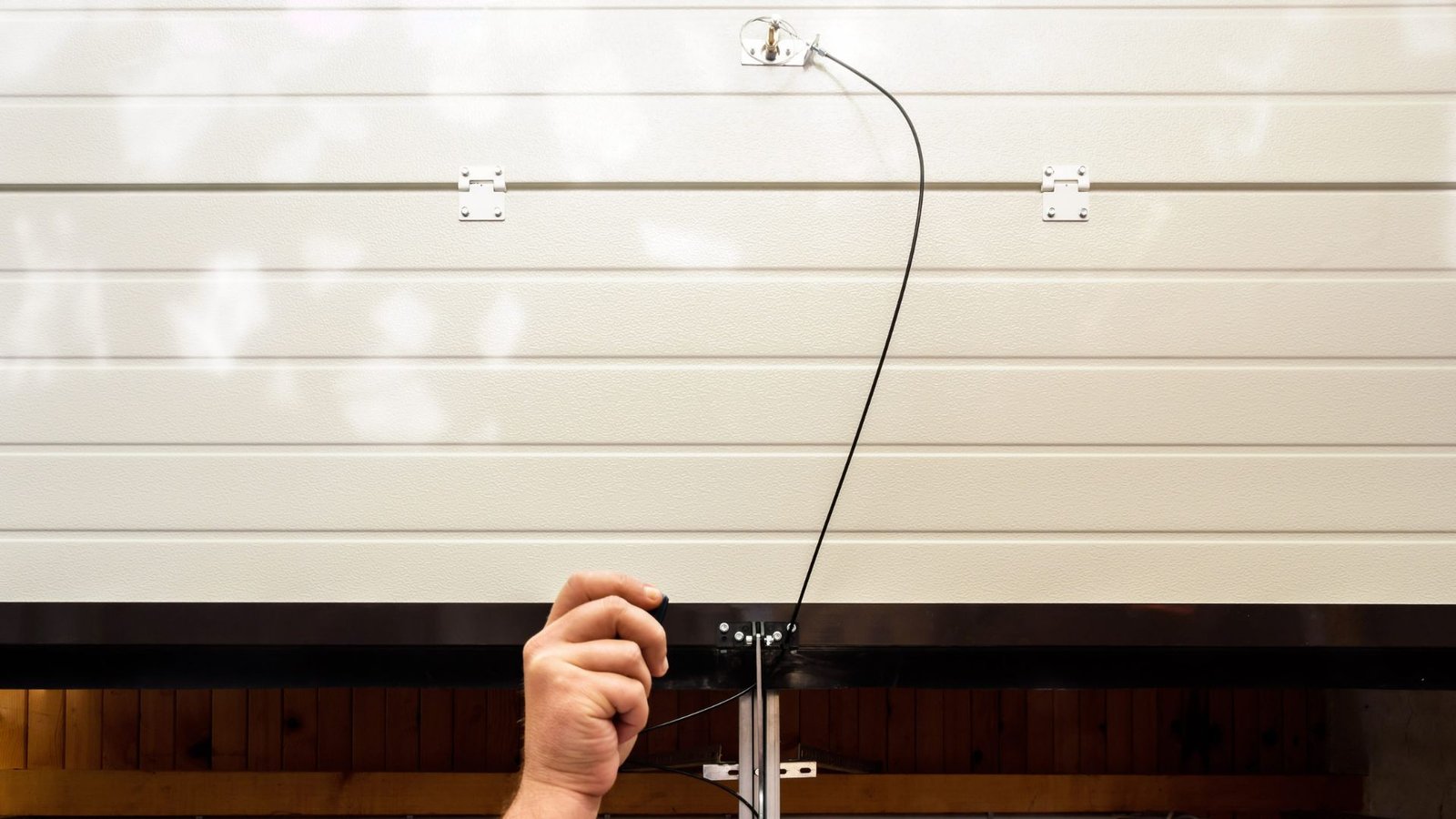

How Long Garage Door Cables Actually Last Before Snapping
Your garage door works hard every single day. Most homeowners never think about the cables holding the whole system together until one snaps without warning and the door comes crashing down.
So how long do garage door cables actually last? And what causes them to fail before their time? Let’s get into the real answers.
What Garage Door Cables Actually Do
Before diving into lifespan, it helps to understand what these cables are doing in the first place.
Garage door cables are made of twisted steel wire rope, similar in construction to cables used in aircraft and industrial equipment. They work in tandem with the torsion spring system to lift and lower hundreds of pounds of door with smooth, controlled force. Without them, even a perfectly functioning garage door opener would be useless.
Each cable wraps around a drum on either side of the door. When the torsion spring unwinds, it transfers force through the cables to lift the door. When the door closes, the cables wind back up. This happens every single time you use your garage, sometimes multiple times a day.
How Long Do Garage Door Cables Last on Average?
Here is the honest answer: most garage door cables last somewhere between 7 and 12 years under normal residential use. Some last longer with proper maintenance. Some fail much sooner because of preventable problems.
The typical cable on a residential garage door is rated to handle around 10,000 cycles. One cycle equals one open and one close. If you use your garage door four times a day, that adds up to roughly 1,460 cycles per year. Do the math, and you are looking at about 6 to 7 years before you hit that threshold.
Higher-quality wire rope with a larger diameter and better construction can push that number closer to 150 to 200 percent of the standard rating. Not all cables are built the same, and the cost difference between a cheap cable and a quality one is usually not worth the risk.
What Makes Cables Wear Out Faster
Rust and Corrosion
This is the number one cable killer, especially in areas with humidity or coastal air. Rust weakens the individual steel wires inside the cable, causing them to break strand by strand. By the time you see visible corrosion on the outside, the internal damage may already be severe.
Some cables are made with hot-dip galvanization to resist rust. If your current cables are not galvanized, they are more vulnerable to corrosion over time.
Worn or Failing Torsion Springs
The torsion spring and cable system are connected. When a torsion spring starts to wear out, the load distribution becomes uneven. The cables end up absorbing force they were never designed to handle alone. This accelerates wear and tear dramatically.
A failing spring is often what causes a cable to snap suddenly rather than gradually. If you notice your door moving unevenly or making grinding noises, do not ignore it.
Poor Alignment and Fraying
Cables that are slightly off track will rub against metal edges every time the door moves. That constant friction creates fraying, which weakens the wire rope from the outside in. A small fray might look minor, but it is a sign the cable is already compromised.
Lack of Maintenance
This one is simple. Cables that are never inspected, lubricated, or tested will deteriorate faster than cables that receive regular attention. Dirt and grime build up, sensors go unchecked, and small problems turn into expensive emergencies.
Warning Signs Your Cables Are About to Fail
You do not have to wait for a complete snap to know something is wrong. Pay attention to these signs:
- Visible fraying, kinking, or unraveling along the cable length
- The door opens unevenly or one side appears lower than the other
- Slack or loose cables hanging away from the drum
- Grinding or scraping sounds when the door moves
- The garage door opener strains or reverses unexpectedly
If you spot any of these, it is time to call a technician before the situation turns into an emergency.
Why DIY Cable Replacement Is a Bad Idea
Some homeowners see a frayed cable and think it is a simple do-it-yourself fix. It is not.
Garage door cables are under extreme tension, especially when connected to a loaded torsion spring. Releasing that tension incorrectly can cause the cable to whip or the spring to release suddenly, resulting in serious injury. This is not a scare tactic. It is a documented risk that even experienced technicians respect.
The tools required to safely wind and unwind torsion springs are specialized. Without them, the job becomes genuinely dangerous. The cost of a professional repair is always less than the cost of an emergency room visit or a door that falls on your car.
How to Get More Life Out of Your Cables
A few simple habits can meaningfully extend the life of your cables:
Scheduling annual maintenance inspections gives a trained technician a chance to catch rust, fraying, or misalignment before they cause a failure. During a tune-up, the cables, drums, springs, and hardware all get checked as a complete system.
Keeping the cables lightly lubricated helps prevent rust and reduces friction. Use a product designed for garage door hardware rather than general-purpose grease, which attracts dirt.
Replacing cables in pairs is also worth mentioning. If one cable is near the end of its life, the other usually is too. Replacing both at the same time saves a second service call and keeps the system balanced.
How to Know When Garage Door Cables Need Attention
Garage door cables typically last between 7 and 12 years, but rust, poor maintenance, and torsion spring problems can cut that lifespan short. The good news is that most failures give you warning signs before they become emergencies. If your cables look worn, sound wrong, or your door is behaving strangely, do not wait it out.
Reach out to the team at Level Up Garage Door to schedule a garage door repair and get your system inspected before a small problem turns into a costly one.