
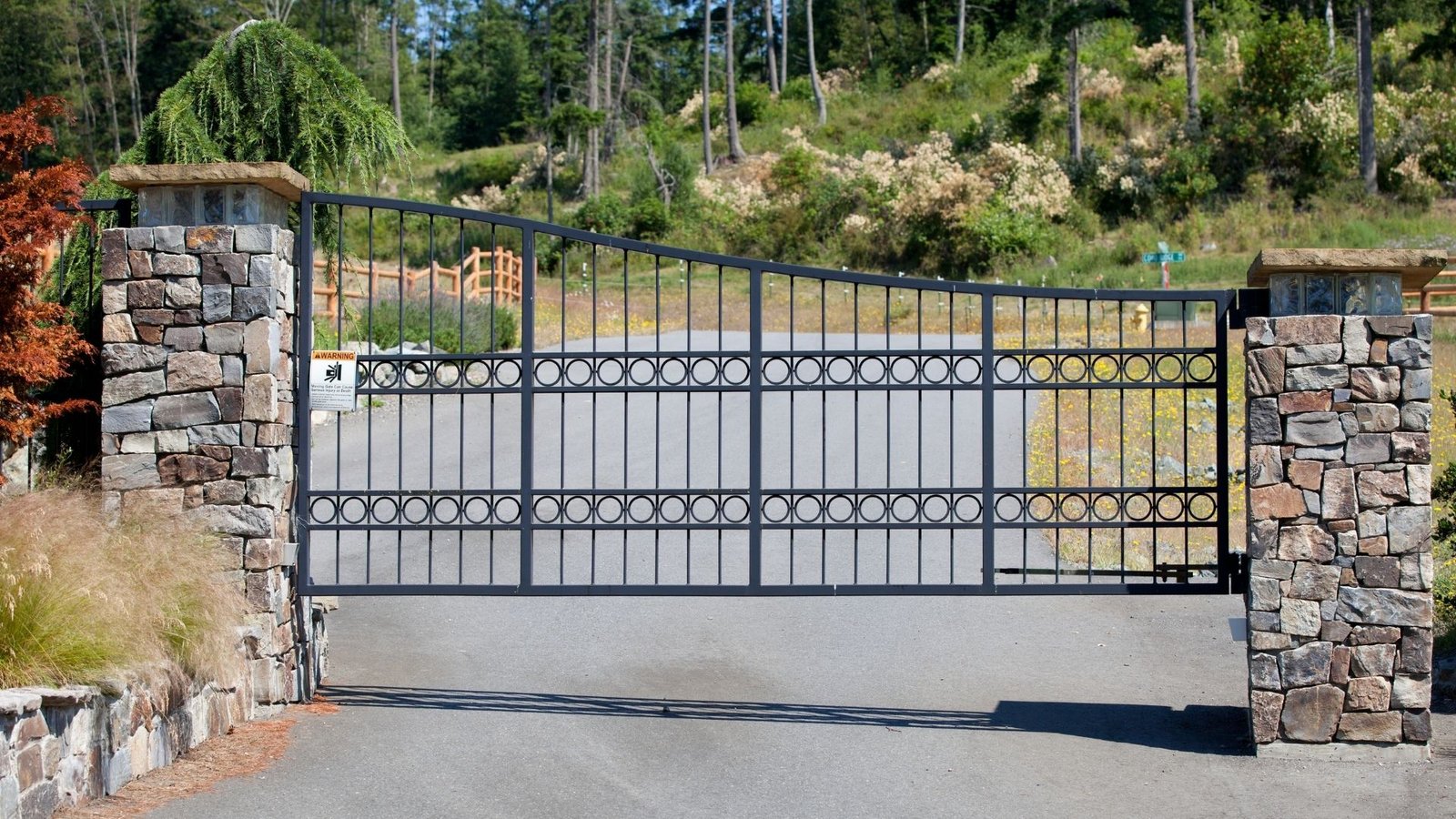

How Wide Should a Driveway Gate Be? Wider Than You Think
Most homeowners underestimate how wide a driveway gate needs to be until the first time they scrape a mirror or block an emergency vehicle from getting through. Gate width is one of those dimensions that sounds simple but has a lot riding on it. Get it wrong, and you’ll be dealing with the consequences for years.
So let’s talk through this properly, because the right measurement depends on more than just your car.
Why Driveway Gate Width Matters More Than You Think
A driveway gate isn’t just a design choice. It’s a functional barrier that every vehicle entering your property has to clear safely. Too narrow, and you create daily frustration. Too wide without proper support, and you’re fighting hinge stress and sagging issues down the road.
The width also affects your fence line, your latch placement, and how the gate swings or slides. Getting the dimension right from the start saves you money and headaches.
Standard Driveway Gate Widths: What the Numbers Actually Mean
Here’s where most guides give you a single number. The truth is, there’s a range – and where you fall in that range depends on your situation.
For Single-Car Driveways
A standard sedan or small SUV needs a minimum clearance of about 10 feet. But most professionals recommend going to at least 12 feet to give drivers comfortable room to enter without anxiety, especially at an angle from the road.
If you’re working with a tight property, 10 feet is survivable. It is not ideal.
For Double-Car Driveways
This is where the “wider than you think” part really kicks in. A double driveway gate should be at least 14 feet wide – and 16 feet is the more practical target. That extra space matters when you’re pulling in a truck, making a wide turn, or just trying not to clip the post on a rushed morning.
If you regularly park side by side, 16 to 18 feet gives you the breathing room you actually need.
If You Own a Truck, RV, or Recreational Vehicle
A standard pickup truck can range from 6.5 to 8 feet wide with mirrors. A recreational vehicle adds even more to that. If an RV or trailer is part of your household, plan for a gate that’s at least 14 feet wide at minimum – and consider going up to 18 or even 20 feet depending on the vehicle’s length and your turning radius from the road.
Don’t measure the vehicle alone. Measure the turning path it takes to enter your driveway.
Height: The Dimension People Forget
Width gets all the attention, but height matters too, especially if your property has a decorative iron or aluminium gate, or if you’re concerned about ride height on lifted vehicles.
Most residential driveway gates run between 4 and 6 feet tall. Wood and metal designs vary, but if privacy is a priority, you’ll want to lean toward the taller end. Just make sure the height works with your fence line and any local zoning requirements in your area.
Speaking of zoning – always check local regulations before you install. Some areas have specific rules about gate height, setback from the road, and even the type of latch or hinge hardware allowed.
Don’t Forget Emergency Vehicle Access
This one doesn’t come up enough. If your gate is on an automatic opener and there’s a power outage, how does an emergency vehicle get through? Most gate systems should have a manual override, but the gate itself needs to be wide enough for emergency vehicle access in the first place.
A fire truck or ambulance typically needs at least 12 to 14 feet of clearance, sometimes more. If your gate is the only way onto your property, factor this into your width decision from day one.
Measuring Your Driveway Gate: Do It Right the First Time
Before you order any gate – whether it’s wood, iron, aluminium, or another metal – take these measurements carefully:
- Driveway opening width at the narrowest point between your posts or fence line
- Your widest vehicle including mirrors and any added accessories
- Turning radius from the road into your driveway
- Overhead clearance if you’re considering a sliding gate or overhead design
- Distance to the storm drain or curb, which can affect how the gate swings open
Getting these dimensions right before installation means you’re not doing this twice.
Swing Gate vs. Sliding Gate: Does Width Change?
Yes, it does – in terms of how you plan the space. A swing gate needs clear space in front of or behind it to open fully. A sliding gate needs length along the fence line to retract into. If your driveway space is limited, the sliding option may let you go wider without sacrificing function.
How Wide Should a Driveway Gate Be? Final Takeaways
Getting your driveway gate width right means thinking about every vehicle that will use it – not just today’s car, but the truck, the guest’s SUV, and yes, the emergency vehicle that might need access one day. The safe starting point for most homes is 14 feet, and wider is rarely something people regret. If you need expert guidance on installation or want to make sure your setup is built to last, our gate installation team is ready to help you get it right.