
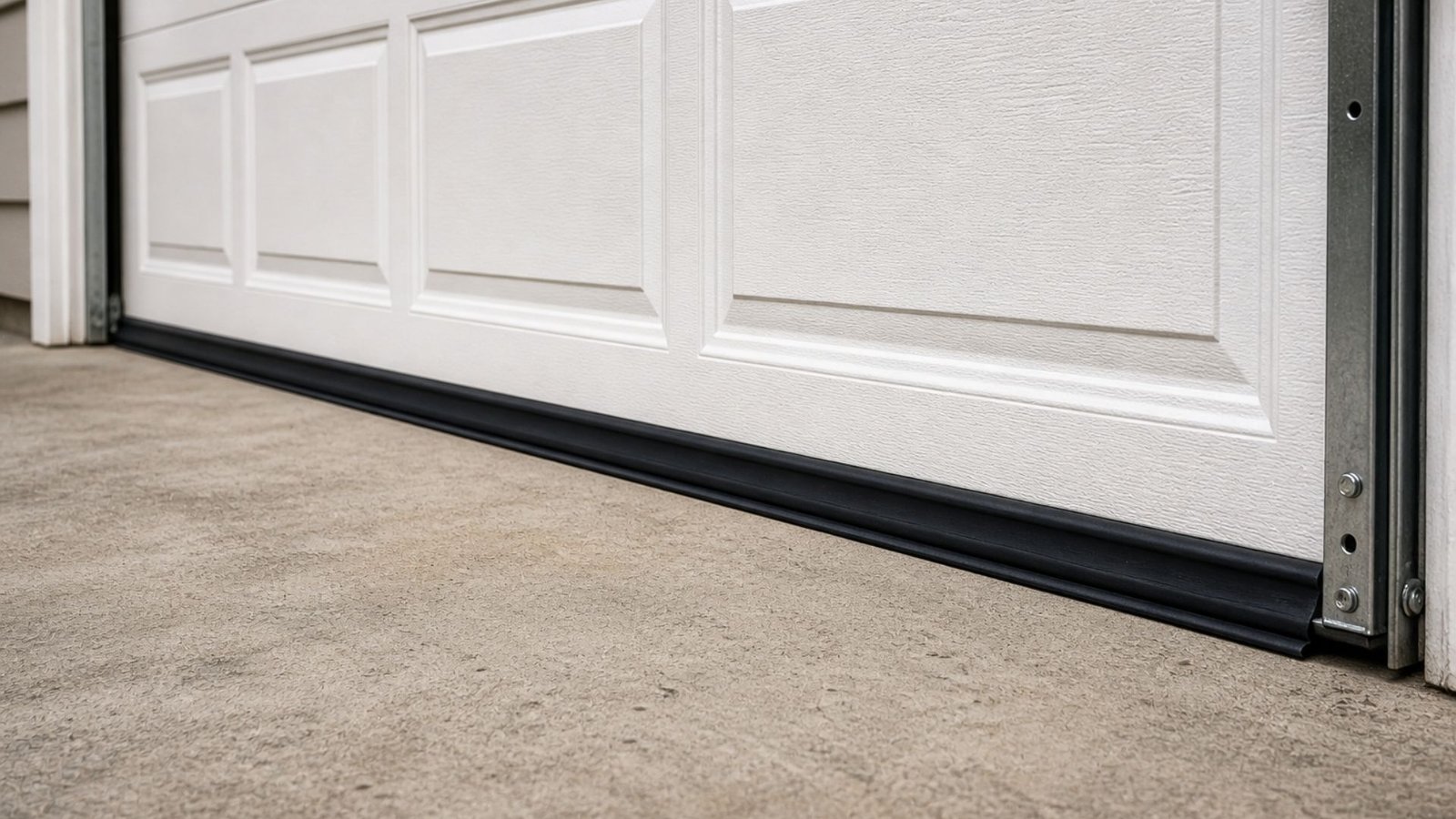

Garage Door Bottom Seal Types: Which One Is Right for Your Door?
If you have ever noticed a draft sneaking in under your garage door or spotted water pooling near the bottom edge after heavy rain, chances are your garage door seal is worn out or is the wrong type for your door. It is one of those small things that makes a huge difference.
The good news is that choosing the right seal does not have to be complicated. Once you understand the main types of garage door bottom seals and what each one is designed to do, the decision becomes much clearer.
Why the Bottom Seal on Your Garage Door Actually Matters
The bottom seal on your garage door is the rubber or vinyl strip attached to the bottom edge of the door. Its job is simple: keep out the things you do not want entering your garage, including water, dust, wind, insects, and pests.
Without a proper seal in place, your garage becomes vulnerable to moisture damage, temperature swings, and debris buildup. Over time, that kind of exposure can damage tools, vehicles, storage, and even the door itself.
A good garage door weather seal also plays a role in energy efficiency. If your garage is climate-controlled or connected to your home, a worn bottom weather seal means your HVAC system may have to work harder.
The Main Types of Garage Door Bottom Seals
There are several types of garage door bottom seals available, and each one works differently depending on the door type, floor condition, and environment. Here is a breakdown of the most common seal options on the market.
Bulb Seal (T-Style and J-Style)
The bulb seal is one of the most widely used garage door weather seal styles for residential garage doors. It features a rounded bulb shape at the bottom that compresses when the door closes, creating a tight seal against the garage floor.
Bulb seals are made from durable rubber or PVC, and they attach to an aluminum retainer at the bottom of the door. When the door closes, the bulb makes contact with the floor and flexes to fill small gaps, which is especially useful on slightly uneven floors or concrete.
You will typically find a T-style or J-style variation depending on the retainer channel design on your door. The T-style slides into a double-channel retainer, while the J-style wraps around the bottom edge. Most residential and commercial garage doors use one of these two configurations.
Bead Type Seals (Beaded Seals)
Bead-type seals, sometimes called beaded seals, work similarly to bulb seals but use a bead shape to lock into a grooved retainer. Instead of relying on compression alone, the bead snaps into a groove along the retainer at the bottom of the door, holding the seal firmly in place.
This design makes the bead type a solid choice for doors that see a lot of wear and friction, since it is less likely to slip or shift over time. Beaded seals are common on older garage doors and rolling steel doors where the retainer uses a specific groove shape.
If you are unsure whether your door uses a bead or bulb design, look at the track retainer at the bottom of your door. The shape of the groove will tell you which type of seal slides in and locks correctly.
Brush Seal
The brush seal is a bit different from rubber seals. Instead of a flexible rubber bulb or bead, it uses dense nylon bristles attached to a metal or aluminum carrier. The bristles sweep against the garage floor as the door closes, blocking out dust, debris, insects, and pests.
Brush seals are particularly popular on rolling steel doors and commercial garage doors. They work effectively on uneven floors where a rubber seal might not make consistent contact. The bristles are flexible enough to conform to surface irregularities without tearing or cracking under friction.
They are also a good option if your garage door opens and closes frequently throughout the day, since nylon bristles tend to hold up well against repeated wear.
Threshold Seal
Unlike the other seal types, a threshold seal is not attached to the bottom of the garage door itself. Instead, it is installed on the floor, directly under where the door closes. It acts as a raised barrier that the door closes down against, creating a layer of protection against water, soil, and pests.
A threshold seal is ideal for garages with sloped or uneven concrete floors, where a standard bottom seal may not sit flush. It is also used in conjunction with an existing bottom seal to add extra protection against water during heavy rain or flooding.
Threshold seals are typically made from PVC or EPDM rubber and can be cut to fit any garage door opening. They attach to the concrete using adhesive, making them relatively easy to install without professional tools.
Door Bottom Seals with Retainer Systems
Many modern residential garage doors, including Wayne Dalton models, come with a dedicated retainer system. The retainer is an aluminum track that runs along the bottom of the door, and the seal is an insert that slides into the channel.
This system makes garage door bottom seal replacement straightforward. You simply slide the old seal out and slide a new seal in. There is no need for drilling or major hardware changes.
If you have a double-channel retainer, you may be able to use either a bulb or bead style insert, depending on the fit. Always measure the width of the channel and the profile of the seal before purchasing a replacement to make sure it fits correctly.
Choosing the Right Seal for Your Door Type
Not all seals are designed for all garage doors. Here is a quick way to match the seal to your door:
- Wood garage doors – Bulb seals or bead-type seals work well. Wood garage doors may have slightly less uniform bottom edges, so a compressible rubber seal is ideal.
- Steel and aluminum garage doors – Most come with a retainer system that accepts a standard bulb or bead seal insert. Check the groove size before purchasing.
- Rolling steel doors – Brush seals and bulb seals are both commonly used. Commercial-grade brush seals handle the heavy-duty demands of high-use doors.
- Doors over uneven floors – A threshold seal installed on the floor, either alone or used in conjunction with a bottom seal, provides the most reliable protection against water and pests.
How to Know When It Is Time to Replace Your Garage Door Seal
The bottom rubber on your garage door does not last forever. Natural rubber and PVC both degrade over time due to temperature extremes, UV exposure, and repeated contact with the floor. Signs that your bottom weatherseal needs replacing include visible cracking, curling edges, gaps when the door closes, or debris and insects finding their way in.
You can find replacement seals at hardware stores or on Amazon, but matching the right profile to your existing retainer is important. A seal that does not fit properly will not protect your garage the way it should.
If you are not sure what type of seal your door uses, or if proper installation is a concern, it is always worth having a professional take a look. The right seal, installed correctly, will protect your space for years without needing attention.
For homeowners dealing with bigger issues, like a damaged retainer, a door that does not sit level, or seals that keep failing, reaching out for professional garage door repair services is the smartest move. Sometimes what looks like a seal problem is actually a door alignment issue underneath the surface.
If you are building new or replacing an entire door, expert garage door installation ensures the right bottom seal is matched to the right door and floor from the start, with no guesswork involved.
Homeowners looking for trusted garage door services in Friendswood can count on Level Up Garage Door to handle everything from seal replacements to full-door work with the same attention to detail.
Conclusion
There are many types of garage door bottom seals, and the right one depends on your door type, floor condition, and what you are trying to keep out. Whether you need a bulb seal, bead seal, brush seal, or threshold seal, matching the seal to the door makes all the difference.
If you are unsure where to start, the team at Level Up Garage Door is ready to help. Schedule a garage door service appointment today and get the right seal in place before small gaps become bigger problems.