
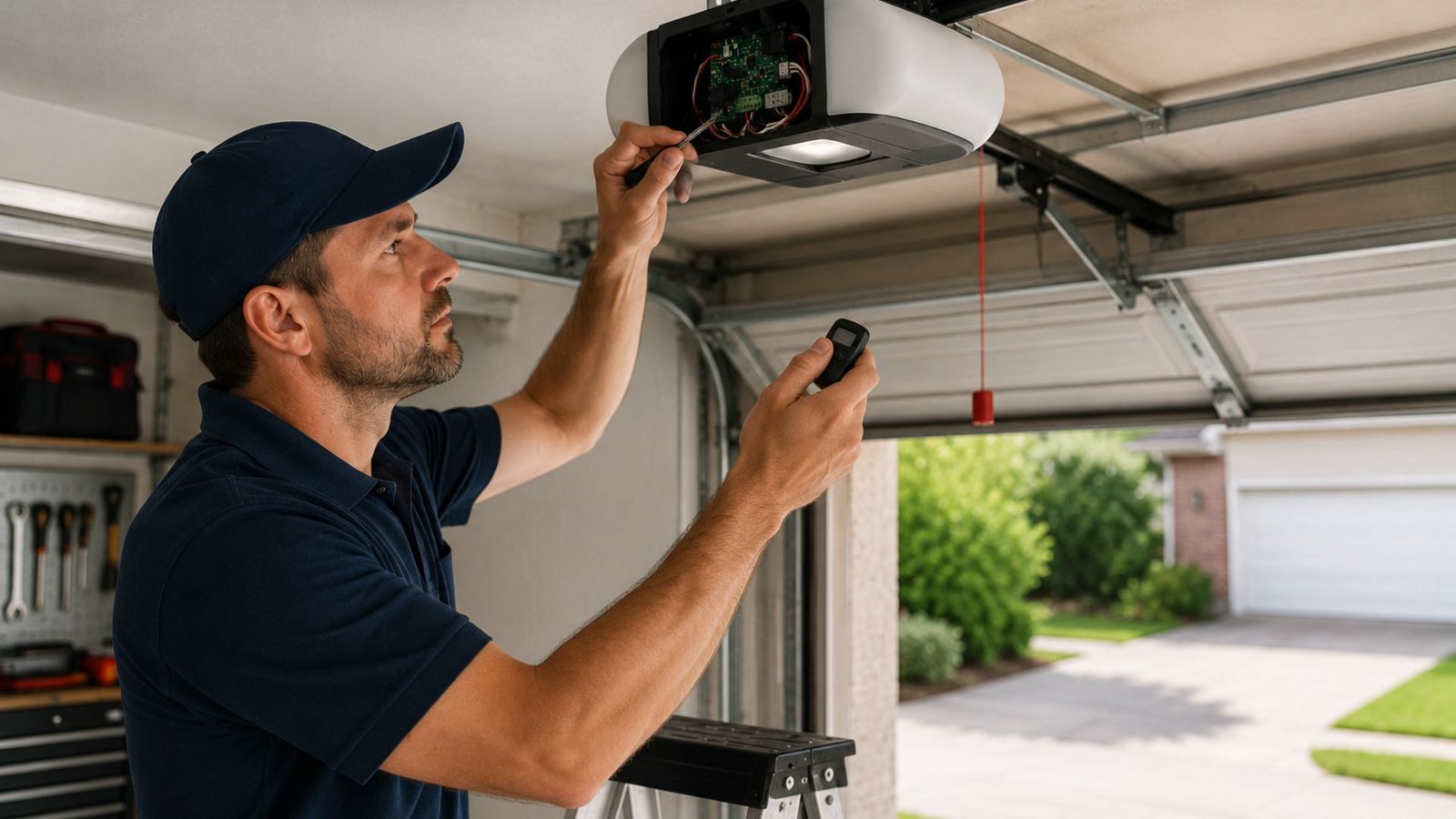

LiftMaster Garage Door Remote Control Not Working? Here's How To Fix It Fast
You press the button on your LiftMaster remote and nothing happens. The garage door just sits there.
No hum, no movement, no response. It is one of those frustrating moments that can throw off your entire morning routine.
Before you assume the worst and call for a full garage door opener repair, take a breath. Most of the time, a LiftMaster remote control that stops working has a simple, fixable cause. This guide walks you through the most common culprits and how to resolve them quickly.
Start With the Most Obvious Fix: The Battery
This sounds too simple, but you would be surprised how often a dead or weak electric battery is the reason a remote stops working. The remote transmitter needs adequate voltage to send a strong signal to the radio receiver inside your garage door opener. When the battery gets low, the signal weakens before it ever reaches the opener.
Replace the battery first – even if you think it still has life in it. Most LiftMaster remotes use a CR2032 or AA battery, depending on the model. Pop it out, swap it in, and test the remote again.
If that solves it, great. If not, keep reading.
Check If the Remote Works Up Close
Walk right up to your garage door opener and press the button from a few feet away. If the door responds at close range but not from the driveway, you likely have a signal or radio frequency range issue.
This usually points to one of two things: a weakened battery (which you should have already replaced), or interference affecting the radio signal. Signal range problems are worth diagnosing carefully before replacing the entire remote control.
Electromagnetic Interference Is More Common Than You Think
Your LiftMaster remote operates on a specific radio frequency in the ISM radio band, typically around 315 MHz or 390 MHz. When something nearby emits competing signals on or near that frequency, it can disrupt communication between your remote transmitter and the radio receiver in the opener.
Common sources of electromagnetic interference include LED lamps, light-emitting diode fixtures, and even certain types of wireless routers. If you recently added a new LED lamp or changed out your bulbs in the garage, that could be interfering with the signal.
LED Bulbs and Your Garage Door Remote
This one trips up a lot of homeowners. Some LED bulbs generate radio frequency noise that directly interferes with the garage door opener’s antenna. The light-emitting diode technology inside certain budget bulbs is poorly shielded and bleeds RF noise into the surrounding area.
Try this: unscrew the LED lamp from the opener’s light socket and test the remote again. If it works, you have found your culprit. Replace the LED bulb with one specifically rated for garage door openers, or switch back to an incandescent light bulb, which does not produce the same radio interference.
Check the Antenna on Your Garage Door Opener
The radio receiver inside your LiftMaster opener relies on a small antenna – usually a short wire or rod hanging down from the motor unit. If this antenna is coiled up, broken, or tucked away where it cannot receive a clean signal, your remote’s range will suffer dramatically.
Look at the motor unit mounted to your ceiling. There should be a small wire dangling from it.
Make sure it is hanging freely and pointing downward. If it looks damaged or chewed through (it does happen), that wire may need to be replaced by a technician.
Reprogram the Remote to the Opener
Sometimes the remote and the opener simply lose their programming connection. This can happen after a power outage, when the opener’s motherboard resets, or if someone accidentally cleared the memory on the unit.
LiftMaster uses a rolling code system, which means the remote and opener communicate through a constantly changing security code. This is great for privacy and security, but it also
means the pairing must be intact for things to work.
Here is the general process to reprogram a LiftMaster remote:
- Locate the “Learn” button on your garage door opener – it is usually on the back or side of the motor unit and may be yellow, green, orange, or purple depending on the model.
- Press and release the Learn button. You will have about 30 seconds to complete the next step.
- Press and hold the button on your remote for three to five seconds until the opener’s light blinks or you hear two clicks.
- Test the remote from a normal distance.
If the reprogram works, your door should respond to the remote again. If not, there may be a deeper issue with the electronics.
Wi-Fi and Wireless Router Interference
Modern homes are full of wireless signals. Your Wi-Fi router, mobile phone, and smart home devices all broadcast wirelessly. In some cases, a wireless router operating on a frequency that overlaps with the opener’s ISM radio band can cause interference.
Try temporarily moving your router or turning off nearby wireless devices to see if the remote starts working. It is not always the cause, but it is worth ruling out, especially in homes with a lot of connected electronics.
Inspect the Remote Control Itself
If none of the above steps have worked, look more closely at the remote. The printed circuit board inside can sometimes fail due to moisture, impact, or age. If you have dropped the remote on concrete a few times or left it in a hot car, internal damage to the PCB or capacitor may be the real issue.
Check the button itself. Press it a few times and notice if it feels stuck, mushy, or unresponsive.
A worn-out button may not be making proper contact with the circuit board to trigger a signal. In that case, the remote itself needs to be replaced.
You can order a replacement LiftMaster remote directly from the manufacturer or through a licensed garage door technician who can ensure compatibility with your specific opener model.
Test the Keypad and Wall Button
Before assuming the remote is broken, test the keypad outside your garage and the wall-mounted button inside. If those work and the remote does not, the problem is isolated to the remote itself. If nothing works – remote, keypad, and wall button – then the issue likely lies with the opener unit, not the remote.
A non-responsive opener could point to a tripped circuit breaker, a blown fuse, a failed capacitor, or a problem with the power supply or motherboard. At that point, you are moving from remote troubleshooting into garage door opener repair territory.
When to Call a Professional
There is a limit to what basic troubleshooting can address. If you have replaced the battery, cleared interference, reprogrammed the remote, and checked the antenna but still have no luck, it is time to bring in an expert.
Issues involving the printed circuit board, wiring, radio receiver, or internal components of the opener require hands-on diagnosis by someone with the proper tools and training. Attempting to open up the opener unit without experience can make things worse and create safety hazards.
A licensed technician can quickly assess whether the problem is in the remote, the opener’s receiver, or somewhere else in the system. Sometimes a simple wire connection is loose. Other times, the motherboard has failed, and the unit needs to be replaced.
Quick Troubleshooting Summary
To recap what to check when your LiftMaster remote is not working:
- Replace the electric battery first
- Test the remote up close to check the signal range
- Look for sources of electromagnetic interference, especially LED lamps
- Check the antenna wire on the opener
- Reprogram the remote using the Learn button and rolling code sequence
- Rule out Wi-Fi or router interference
- Inspect the remote’s button and printed circuit board for physical damage
- Test the keypad and wall button to isolate whether the opener itself is the problem
Most of these steps take only a few minutes and cost little to nothing. Work through them in order before jumping to conclusions about needing a full replacement.
Frequently Asked Questions
Why does my LiftMaster remote only work sometimes?
Intermittent operation usually points to a weak battery, borderline signal range, or electromagnetic interference. It can also indicate a failing printed circuit board inside the remote.
Start with a new battery and check for nearby LED lamps or wireless devices causing signal disruption.
Can an LED bulb really stop my garage door remote from working?
Yes, it absolutely can. Certain LED bulbs emit radio frequency noise that interferes with the signal between your LiftMaster remote transmitter and the opener’s radio receiver. Swapping out the LED lamp for one rated for garage door openers – or using an incandescent light bulb – often resolves the problem.
How do I know if my LiftMaster remote needs to be replaced?
If the battery is fresh, the remote is programmed correctly, there is no interference present, and the opener responds to the keypad and wall button but not the remote, the remote itself has likely failed. Physical damage to the button or printed circuit board can also indicate it is time for a new remote.
What if my garage door opener does not respond to anything?
If the wall button, keypad, and remote all fail to trigger the opener, the issue is with the opener unit itself – not the remote. Check the power supply, look for a tripped breaker, and contact a professional for garage door opener repair if the unit still does not respond.
Why Your LiftMaster Remote May Not Be Working
A LiftMaster remote control that stops working is frustrating, but it is rarely a disaster. Most issues come down to a dead battery, a pairing that needs to be refreshed, or interference from an LED lamp or nearby wireless device. Work through the steps above, and you will likely have it sorted in under 15 minutes. If the problem turns out to be deeper – inside the opener’s motor unit, receiver, or wiring – our garage door repair service is here to help. Call us at (832) 930-0827 for fast, honest service from a technician who knows LiftMaster systems inside and out.