

How to Measure a Garage Door Torsion Spring: A Step-by-Step Guide
Most homeowners never think about their torsion spring until it breaks with a loud bang at 7 a.m. on a Monday. By then, the garage door will not budge, and the whole day is off track.
The good news is that you can get ahead of this. Knowing how to measure your garage door torsion spring means you can order the right replacement part before things go wrong, instead of scrambling once the door is stuck.
Why the Right Measurements Matter
A torsion spring works by storing mechanical energy through torsion, the twisting force that helps lift a heavy door with little effort. If you order the wrong size, it will not balance the door correctly. That puts extra strain on the opener, the cables, and the track, and can shorten the life of the whole system. Getting the measurements right the first time saves you a return shipment and a second trip to the garage.
Signs You Need to Measure Your Torsion Spring
You do not have to wait for a full break to check your spring. Common signs it is time to measure include:
- The spring already has a visible gap or has snapped in two
- The door feels heavier than usual when lifted by hand
- You hear a loud bang from the garage, often first thing in the morning
- The door opens unevenly or looks crooked in the track
- The coils show rust, flaking paint, or visible stretching between coils
If any of these sound familiar, measuring is the right first step before you order parts or call for a repair.
Tools You Will Need
Before you start, gather a few basic tools:
- A tape measure
- A micrometer or calipers, for an accurate wire diameter reading
- A notepad or your phone, to record each measurement as you go
- A flashlight, if your garage door area is dimly lit
Safety Precautions Before You Begin
Do not attempt to remove, loosen, or wind the spring yourself. A wound torsion spring stores a large amount of tension, and handling it without the right tools and training can cause serious injury. You are only measuring the spring as it sits on the door, not touching or adjusting the wound coils. If your door is currently stuck in the down position because the spring has failed, leave it closed and call a licensed technician rather than forcing it open.
How to Measure a Garage Door Torsion Spring
Step 1: Measure the Wire Size
Use a micrometer or calipers to measure the diameter of the wire itself, not the whole spring. For a more accurate reading, measure across 10 coils with a tape measure, then divide by 10. This method gives you a precise wire diameter and avoids errors from rust, paint buildup, or corrosion distorting a single coil reading.
Step 2: Measure the Inside Diameter
Measure the inner opening of the spring, where the cone fits over the torsion bar. Standard residential garage door springs typically run 1 3/4 inches or 2 inches in inside diameter.
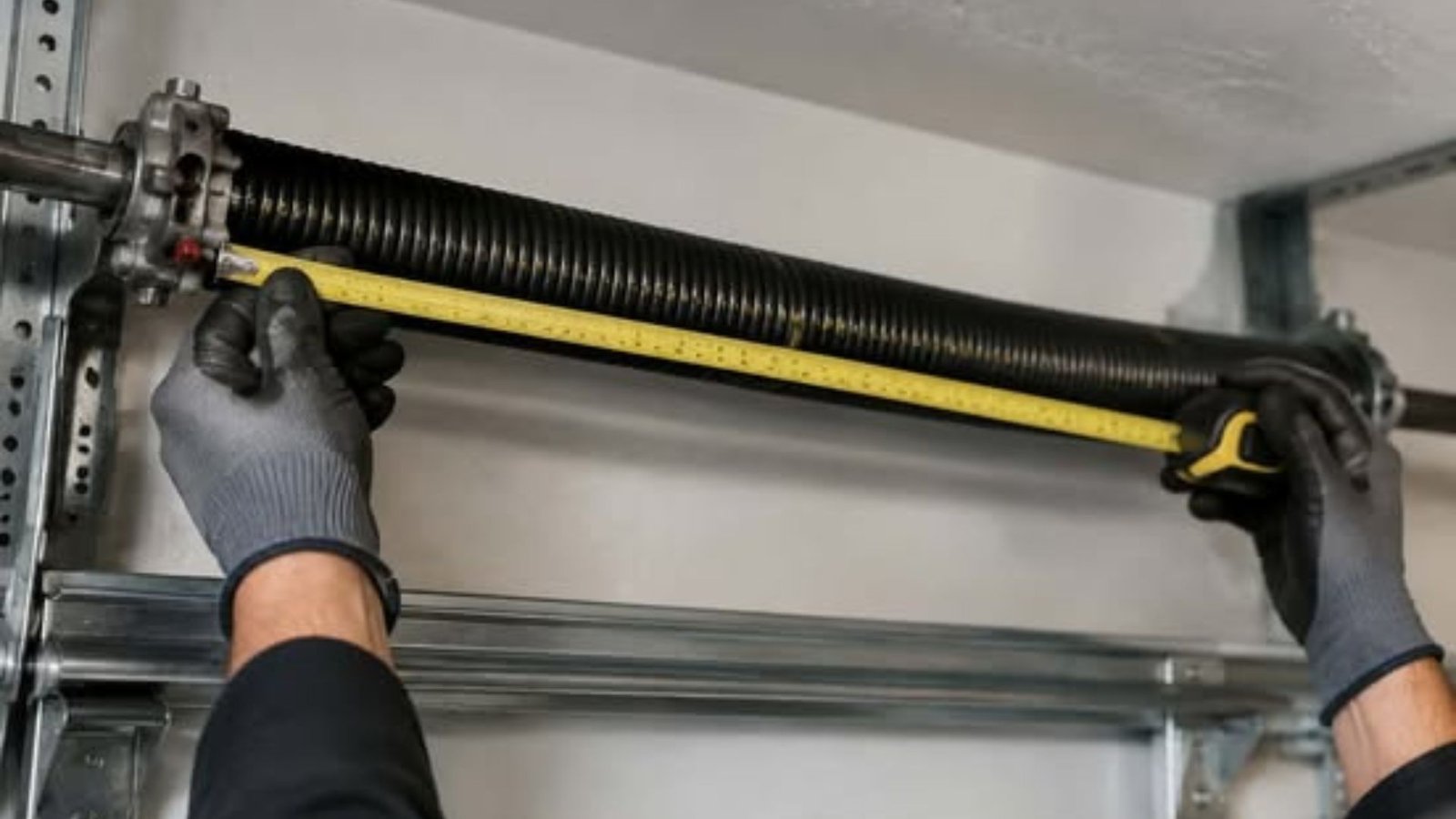
Step 3: Measure the Overall Length
Measure the full length of the spring from end to end, not including the cones. Write this number down along with the wire size and inside diameter, since all three measurements are needed to order the correct part.
Step 4: Determine the Wind Direction
Stand facing the spring. If the end wire points up and to the right, it is a right-wind spring. If it points up and to the left, it is a left-wind spring. Getting this backward is one of the most common ordering mistakes, so double-check before you move on.
Step 5: Check Whether You Have One Spring or Two
Many residential garage doors use two torsion springs mounted on a shaft above the door, while some lighter doors use just one. If your door has two springs, measure both. They are often matched in size, but not always, especially if one was replaced before and the other was not.
How to Read Torsion Spring Color Codes
Some manufacturers paint a dab of color on the end of a torsion spring to indicate wire size. These color codes are not standardized across brands, so treat any paint marking as a helpful clue rather than a substitute for your own measurements.
Common Measuring Mistakes to Avoid
- Measuring over rust, paint, or corrosion buildup instead of the bare wire
- Measuring only one spring on a two-spring door
- Confusing the wind direction by not standing directly in front of the spring
- Rounding measurements instead of recording exact figures
- Forgetting to note whether the length includes the end cones
When to Call a Professional
If you notice rust, corrosion, or visible gaps between coils, the spring is already weakening. At that point, measuring is step one, and replacement comes next. Torsion springs operate under continuous tension even when the door is closed, so the actual removal and installation should always be handled by a licensed garage door technician.
Frequently Asked Questions
Can I measure a torsion spring without removing it from the door?
Yes. All of the measurements covered here, wire size, inside diameter, length, and wind direction, can be taken while the spring is still mounted above the door. You do not need to remove or unwind it.
How long do torsion springs typically last?
Most torsion springs are rated for thousands of open-and-close cycles, but the actual lifespan depends on how often the door is used, local humidity and temperature swings, and how well the spring has been maintained.
What happens if I order the wrong size spring?
A spring that is too weak or too strong for your door will not balance it correctly. This can cause the opener to strain, the door to close unevenly, or the cables to wear out faster than they should.
Do all garage doors have two torsion springs?
No. Many standard doors use two springs for balance and backup, but some lighter or smaller doors are designed to run on a single spring. Check what your door currently has installed before ordering a replacement.
Get the Measurements Right, Then Call In the Pros
Getting accurate measurements is smart prep work, but installing a torsion spring is a different job entirely. The tension stored in these springs is genuinely hazardous, and it is not a place to guess. If your spring is showing wear or has already snapped, the safest move is to schedule a professional garage door repair with a licensed technician who can handle the job correctly the first time.