
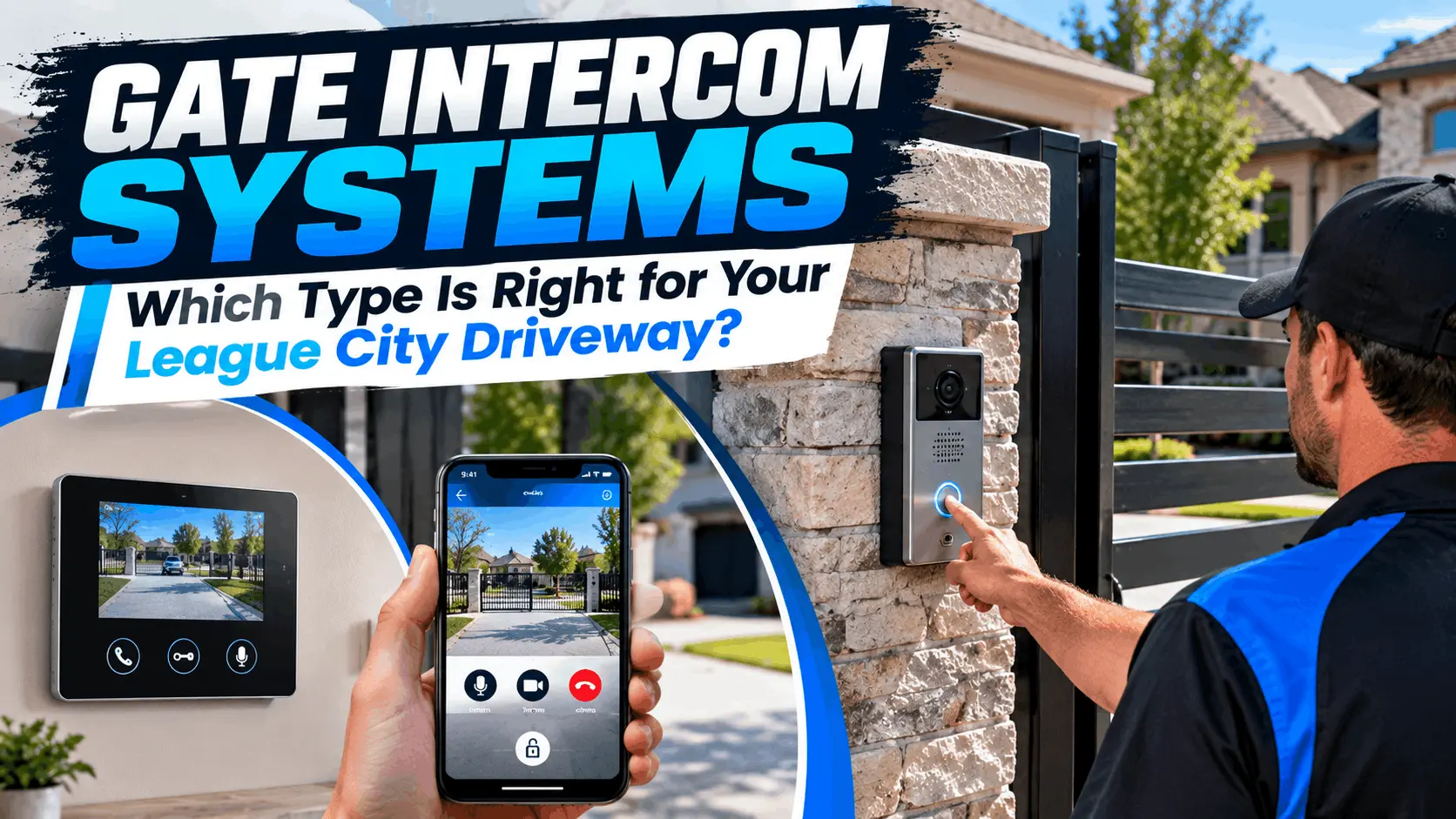

Gate Intercom Systems: Which Type Is Right for Your League City Driveway?
A reliable gate intercom system helps you identify visitors, communicate with delivery drivers, and decide who can enter your property without walking to the driveway gate. For residential properties in League City, TX, the right system can improve everyday convenience while giving you more control over access. However, wired, wireless, video, and cellular intercom systems work differently, so choosing the right option depends on your driveway layout, connectivity, and security requirements.
Some systems let you speak with visitors through an indoor station, while others send calls and video directly to your smartphone. Certain models can also connect to an automatic gate operator, allowing you to authorize entry remotely. Understanding these differences can help you select a system that suits your property rather than paying for features you may not need.
What Is a Gate Intercom System?
A gate intercom system allows visitors to contact you from an entrance gate before they enter your property. Depending on the model, communication may use audio, video, a telephone connection, Wi-Fi, or a cellular network.
When a visitor arrives, they use the outdoor intercom station to call the resident or authorized contact. You can communicate with the visitor, verify their identity using the available features, and release the gate if access is appropriate. Some systems work with a dedicated indoor monitor, while others connect to a mobile app.
An intercom is not the same as a keypad or remote control. A keypad typically grants entry through an authorized code, while a remote allows an approved user to operate the gate. An intercom adds a communication step so you can assess a visitor before allowing entry.
If your existing entrance has operating problems, consider having the gate inspected before adding new access equipment. Our gate repair services in League City, TX can help address mechanical or operational issues that may affect a new system’s performance.
Types of Gate Intercom Systems for Residential Driveways
1. Audio Gate Intercom Systems
An audio intercom allows you to speak with visitors without providing a video feed. When someone presses the call button, the system connects to an indoor station or compatible phone, depending on the model.
This option can work well for residential properties where straightforward communication is the main priority. It may also be suitable when you already have a camera covering the entrance or do not need visual identification through the intercom itself.
Audio systems generally have fewer features than advanced video systems, but that simplicity can be useful. Before selecting one, check the communication range, installation requirements, compatibility with your gate operator, and whether it supports remote gate release.
2. Video Gate Intercom Systems
A video intercom combines two-way communication with a camera, allowing you to see a visitor while speaking with them. Depending on the product, the system may include an indoor screen, smartphone video calling, visitor snapshots, or recorded activity.
Video can be particularly useful when delivery drivers, service providers, and unfamiliar visitors regularly arrive at your property. Instead of relying only on a voice, you can view the person at the entrance before deciding whether to grant access.
For a residential driveway in League City, TX, a video intercom may be worth considering if visitor identification is a priority. Look for a camera with suitable nighttime visibility, clear audio, weather-resistant outdoor hardware, and a reliable connection.
Remember that video recording and storage features vary by model. Check whether the system requires a subscription for cloud storage or advanced app functions.
3. Wired Gate Intercom Systems
A wired intercom uses physical cabling to connect the outdoor station to an indoor monitor, network, or other system components. Depending on its design, the wiring may carry audio, video, power, and control signals.
A properly installed wired system can provide a dependable connection without relying on a strong Wi-Fi signal at the gate. It can be a good option for new construction or properties where suitable conduit and cabling are already available.
The main consideration is installation. If the gate is far from the residence, adding cables may require trenching or other site work. Existing driveways, landscaping, and hard surfaces can make this process more complicated.
If you are planning a new automatic gate installation or modifying an existing entrance, consider the intercom wiring early. Planning the cable route before completing other driveway work can help avoid unnecessary disruption later.
4. Wireless Gate Intercom Systems
A wireless intercom communicates without requiring a dedicated physical communication cable between every component. Depending on the product, it may use a proprietary radio connection, Wi-Fi, or another wireless technology.
Wireless systems can simplify installation when running cable would be difficult or disruptive. However, the term wireless does not always mean the system needs no wiring at the gate. Some units still require a power supply and a compatible connection to the gate operator.
Range and signal quality are important. Walls, metal structures, interference, and the distance between the gate and residence can affect performance. Test the connection at the actual installation location instead of relying solely on the range advertised by the manufacturer.
5. Cellular Gate Intercom Systems
A cellular intercom uses a supported mobile network to connect the gate station with a phone or designated contact. This can be useful when the gate is far from the residence or the property’s Wi-Fi network does not reach the entrance.
Depending on the model, visitors may be able to call a resident’s phone, and the resident may be able to authorize entry remotely. Cellular connectivity can reduce the need to extend the property’s Wi-Fi network to the gate.
The main considerations are cellular coverage, power availability, and recurring service fees. A cellular unit will not provide reliable communication if the required network has poor reception at the entrance. Confirm coverage at the actual gate location and check the provider’s service requirements before purchasing.
6. Smart Gate Intercom Systems
Smart intercom systems connect communication and access features with a smartphone app or compatible network. Depending on the product, you may be able to receive visitor calls, view live video, communicate remotely, and trigger a compatible gate operator.
This type of system can be useful when you want to manage visitor access while away from the property. For example, you may be able to respond to an expected delivery without being physically present at the gate.
Smart features depend on the exact model, internet or cellular connectivity, and compatibility with the gate operator. Some systems also require accounts, subscriptions, or additional access-control hardware. Review these requirements before choosing a product.
Wired vs. Wireless vs. Cellular: Which Is Better?
The best connection type depends on the physical layout of your driveway and the infrastructure available at the entrance. There is no single option that works best for every property.
A wired system is worth considering when dependable connectivity is a priority and installing cable is practical. A wireless system may be more convenient when the gate is relatively close to the residence and a reliable signal is available. A cellular system can be a better fit for a distant entrance where extending the network would be difficult.
Before making a decision, consider how far the gate is from the house, whether power is available at the entrance, and whether the system needs to support video. Video communication generally requires more network capacity than basic audio, so weak connectivity may have a greater impact on performance.
Also consider what happens during an internet outage or cellular disruption. The communication method and the gate operator’s power supply are separate concerns, and neither should be assumed to have backup capability without checking the product specifications.
What Features Should You Look for in a Gate Intercom?
The right features depend on how you use your driveway. For many residential properties, clear two-way communication, reliable visitor notifications, and compatible gate release are the most important functions.
If you want to identify visitors visually, choose a video intercom with a suitable camera and nighttime visibility. If you regularly receive deliveries when you are away, smartphone notifications and remote communication may be more useful than a basic indoor station.
Weather resistance is another important consideration because the outdoor station must withstand the conditions at your gate. Check the manufacturer’s outdoor-use rating, temperature specifications, and installation instructions.
You should also confirm compatibility with the existing gate operator. An intercom may communicate successfully with a visitor but still require a separate compatible relay or access-control connection to operate the gate. Do not assume every intercom can control every automatic gate without additional hardware.
For properties with several authorized users, check whether the system supports multiple contacts, user permissions, and access records. If the gate is part of a shared entrance, make sure the system can support the number of residents or users who need access.
How Much Does a Gate Intercom System Cost?
The total cost depends on the intercom type, equipment features, installation complexity, and the condition of the existing gate system. A basic audio unit typically has different requirements from a video intercom with smartphone access and remote gate release.
Wired systems may require additional labor for cable routing or trenching. Wireless systems may reduce some installation work, but they can require signal improvements or compatible accessories. Cellular systems may involve recurring service fees, while smart systems may have optional or required subscriptions for specific features.
The gate operator itself also matters. If the existing operator does not have a compatible input for the selected intercom, additional equipment or modifications may be necessary.
For an accurate estimate, have the entrance assessed and identify the features you actually need. Comparing systems based only on the price of the intercom hardware may overlook installation, connectivity, and compatibility costs.
Can a Gate Intercom Be Added to an Existing Automatic Gate?
In many cases, an intercom can be added to an existing automatic gate, provided the selected equipment is compatible with the operator and the installation requirements can be met.
The process generally involves identifying the gate operator model, choosing an appropriate intercom, confirming the communication method, and connecting the required control interface. Video systems may also need camera positioning, network configuration, and power planning.
Older gate operators may have different control connections from newer equipment, so compatibility should be checked before purchasing an intercom. If the gate already has intermittent operating problems, those issues should be diagnosed first.
Our guide to automatic gate troubleshooting explains common operational problems that may need attention before adding new access features.
Common Gate Intercom Problems and How to Prevent Them
An intercom that fails to connect, produces unclear audio, or sends delayed notifications can make visitor access frustrating. Many of these issues relate to connectivity, power, incorrect configuration, or incompatible equipment.
For wireless and Wi-Fi systems, check the signal at the outdoor station rather than assuming the network reaches the gate. For cellular units, confirm that the supported carrier has adequate coverage at the entrance. For wired systems, installation quality and cable condition can affect communication.
Video quality can also be affected by camera placement, lighting, and network performance. Position the camera according to the manufacturer’s guidance and make sure the visitor’s face is visible under both daytime and nighttime conditions.
Keep the system’s software updated where applicable, use strong account credentials for app-connected products, and limit access to authorized users. If the intercom communicates properly but the gate does not release, the issue may involve the gate operator, relay connection, or access-control configuration rather than the communication device itself.
Why Professional Installation Matters
A gate intercom involves more than mounting a call button. The outdoor station, power supply, communication network, and gate operator must work together correctly for the system to perform as expected.
Professional installation can help confirm compatibility, plan wiring, assess signal strength, and configure remote access. It can also help identify problems with the existing gate operator before they affect the new system.
If you are considering a broader gate upgrade, you can review our gate repair service in Alvin, TX for an example of the gate services available in the surrounding service area. The appropriate solution for your property will depend on its equipment and site conditions.
For residents in League City, TX, the goal is to select a system that supports your daily access needs without adding unnecessary complexity. A well-matched intercom should make it easier to communicate with visitors while working reliably with the existing gate.
Final Thoughts
Choosing the right gate intercom system for your League City driveway starts with understanding how you want to communicate with visitors and control entry. Audio systems provide straightforward communication, video systems help you identify visitors, wired connections offer a dependable option when cabling is practical, and wireless or cellular systems can simplify access where traditional wiring or Wi-Fi is difficult.
Before buying, verify the system’s compatibility with your gate operator, check connectivity at the entrance, and review any ongoing service requirements. If remote access and visitor identification are priorities, a compatible video intercom with smartphone support may be worth considering.
The best choice is not necessarily the system with the most features. It is the one that fits your driveway, provides dependable communication, and works safely with your automatic gate.
Frequently Asked Questions
1. What type of gate intercom system is best for a residential driveway?
The best option depends on your needs. An audio intercom can be sufficient for basic communication, while a video intercom helps you identify visitors. Wireless or cellular models may be useful when running communication cables to the gate is difficult.
2. Can I open my automatic gate using a gate intercom?
Many intercom systems support remote gate release when connected to a compatible gate operator. However, the intercom and operator must be compatible, and additional control hardware may be required.
3. Does a gate intercom need Wi-Fi?
Not always. Some systems use wired connections, dedicated wireless technology, or cellular networks. Wi-Fi-based models need a reliable signal at the gate, while cellular systems require compatible network coverage and may involve service fees.
4. Can I install a video intercom on an existing gate?
Often, yes. The selected system must be compatible with the existing gate operator and have suitable power and connectivity. An installer can check the equipment and determine whether additional wiring or accessories are needed.
5. Do cellular gate intercom systems have monthly fees?
Many cellular systems require an active mobile service plan or subscription, although the terms vary by manufacturer and model. Check the recurring costs, coverage requirements, and included features before purchasing.