
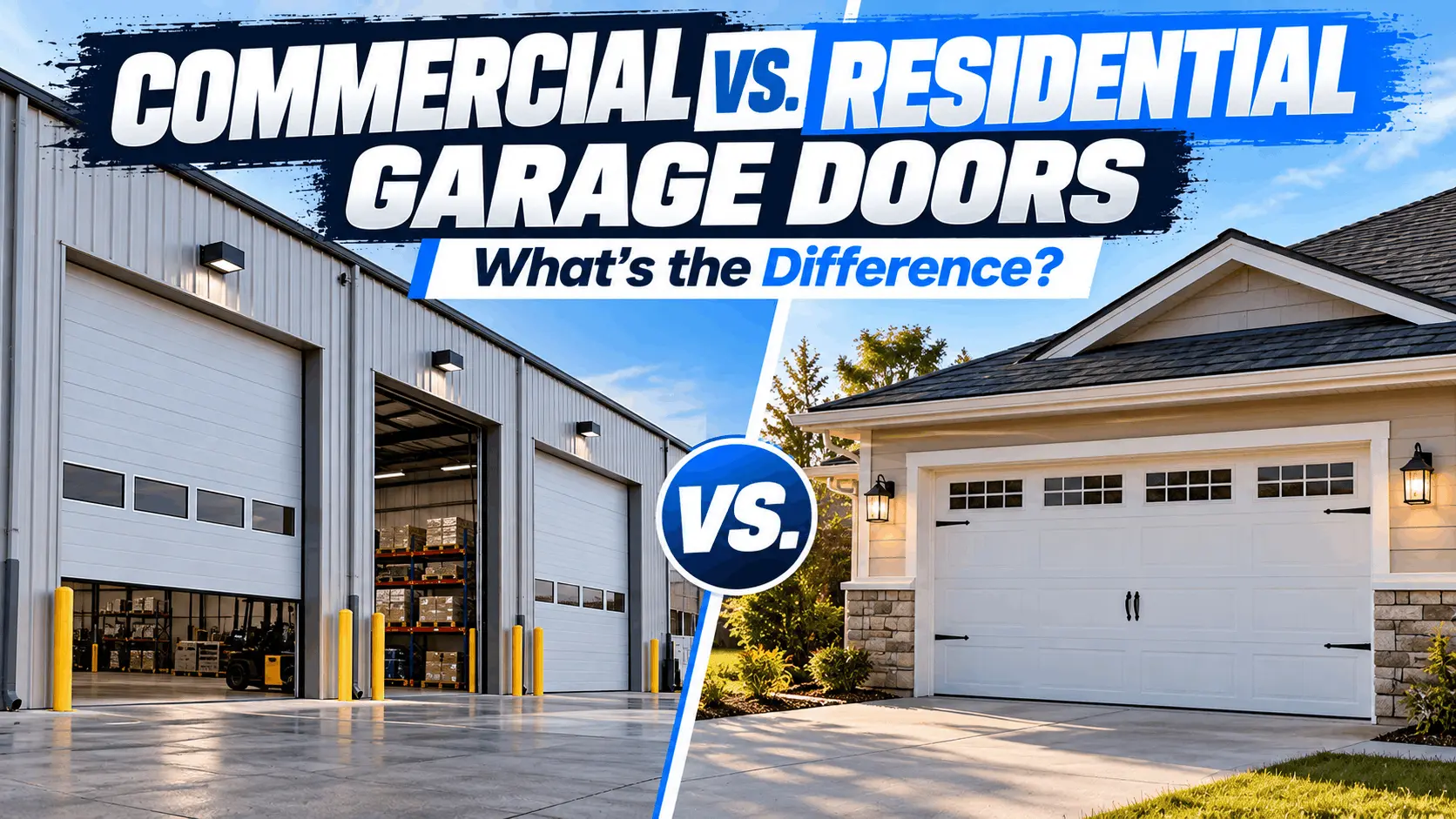

Commercial Garage Doors vs. Residential Garage Doors: What’s the Difference?
Commercial garage doors and residential garage doors may serve a similar purpose, but they are designed for different environments, usage levels, and security requirements. If you are comparing commercial garage doors with residential options, understanding their differences can help you choose the right door for your property. Commercial facilities often require stronger construction, larger dimensions, and systems that can handle frequent operation, while residential garage doors typically prioritize appearance, insulation, convenience, and everyday security.
The right choice depends on how the garage is used, the size of the opening, the amount of daily traffic, and the level of protection required. This guide explains the key differences between commercial and residential garage doors, including construction, operation, maintenance, safety, and installation considerations.
What Are Commercial Garage Doors?
Commercial garage doors are designed for facilities that need reliable access, durable construction, and consistent performance under demanding conditions. They are commonly installed in warehouses, distribution centers, automotive repair shops, industrial buildings, storage facilities, and commercial service properties.
These doors may need to accommodate delivery vehicles, commercial equipment, and frequent opening and closing throughout the day. Depending on the application, commercial systems can include sectional overhead doors, rolling steel doors, high-speed doors, and other specialized designs.
Commercial garage doors are available in different materials, sizes, insulation levels, and operating configurations. Selecting the appropriate system requires considering the building’s layout, traffic volume, security requirements, and operating environment.
What Are Residential Garage Doors?
Residential garage doors are designed for private properties, including single-family homes, townhouses, and certain residential developments. Their primary purposes include protecting vehicles and stored belongings, improving property security, and providing convenient access.
Residential garage doors are available in a wide range of styles, including traditional raised-panel designs, modern flush-panel doors, carriage-house styles, and doors with decorative windows. Common materials include steel, aluminum, wood, and composite materials.
Many residential systems use an automatic garage door opener controlled by a remote, wall button, keypad, or smartphone-compatible device. Insulation and weather sealing may also help improve indoor comfort and reduce unwanted air movement between the garage and adjacent living spaces.
Commercial Garage Doors vs. Residential Garage Doors: Key Differences
Although both types of doors can use similar operating principles, several important differences affect their suitability for a particular property.
1. Construction and Durability
Commercial garage doors are often engineered to withstand heavier use and more demanding operating conditions. Depending on the application, they may feature reinforced sections, heavier-duty hardware, stronger tracks, and components designed for frequent operation.
Residential garage doors generally use lighter construction suited to everyday residential use. Their design balances durability, appearance, security, and ease of operation.
However, construction varies significantly between models. A heavy-duty residential door may be more robust than a basic commercial door intended for light-duty use. The door’s specifications and intended application matter more than its label alone.
2. Size and Opening Requirements
Commercial garage doors frequently serve larger openings that accommodate delivery trucks, service vehicles, industrial equipment, or warehouse operations. Some facilities require oversized overhead doors or specialized configurations to meet their operational needs.
Residential garage doors are typically sized for passenger vehicles and residential garage layouts. Single-car and double-car openings are common, although custom dimensions are available.
Before selecting either type, measure the opening and consider the available headroom, side clearance, ceiling space, and surrounding structure. Commercial applications may require additional planning for equipment, vehicle clearance, and building access.
3. Daily Usage and Operating Cycles
One of the most significant differences is how frequently the door operates.
A commercial facility may open and close its garage door repeatedly throughout the working day. Warehouses, loading areas, and automotive facilities may depend on reliable door operation to maintain workflow and vehicle movement.
Residential garage doors usually operate fewer cycles per day, although usage varies by household.
The opener and supporting hardware should match the expected operating frequency. Choosing an operator that is not designed for the workload can contribute to premature wear, inconsistent performance, and increased maintenance requirements.
4. Garage Door Openers and Operating Systems
Commercial garage door openers are selected according to door size, weight, operating frequency, and the requirements of the facility. Depending on the application, systems may use jackshaft, trolley, or other operator configurations.
Residential garage door openers are commonly designed for private garage use and may include belt-drive, chain-drive, or screw-drive mechanisms. Many modern models also offer smartphone controls, battery backup, and security features.
The opener must be compatible with the door’s weight, balance, dimensions, and operating requirements. A larger motor is not automatically the right solution if the door itself has mechanical problems.
If you are planning an opener upgrade, review the factors that affect garage door opener installation costs before choosing a system.
5. Safety Features and Security
Both commercial and residential garage doors need appropriate safety and security measures, but the requirements can differ according to their environment and intended use.
Commercial systems may require access controls, monitored operating areas, safety edges, photoelectric sensors, emergency-release provisions, and other safeguards based on the door type and applicable standards.
Residential systems commonly use automatic reversal features and photoelectric safety sensors to help prevent the door from closing when an obstruction is detected. Rolling steel and other specialized door systems may use different safety arrangements.
Security requirements also depend on the property. A commercial facility may need controlled employee access, restricted entry, or integration with a larger security system. A residential property may prioritize remote access, keypad entry, and protection against unauthorized operation.
Safety equipment should be installed, tested, and maintained according to the manufacturer’s instructions and applicable requirements.
6. Insulation and Energy Efficiency
Insulation can be important for both commercial and residential garage doors, but the ideal specifications depend on how the building is used.
Commercial properties with temperature-sensitive inventory, climate-controlled work areas, or attached conditioned spaces may benefit from insulated doors with suitable thermal performance. Some facilities also need to consider air leakage, condensation, and environmental conditions.
Residential garage doors may help reduce heat transfer between the garage and outdoor environment, particularly when the garage shares walls with living spaces or is used as a workshop.
Insulation is not the only factor that affects energy performance. Weather seals, perimeter gaps, installation quality, and the building’s overall insulation also matter.
7. Appearance and Customization
Residential garage doors often offer more decorative choices because their appearance contributes directly to the property’s exterior design. Homeowners can select colors, window layouts, panel patterns, finishes, and materials that complement the building.
Commercial garage doors usually prioritize practical requirements, including durability, visibility, security, and compatibility with the facility. Nevertheless, commercial doors are available in different colors, finishes, and configurations to suit the property’s appearance and operational needs.
The best design is one that meets the functional requirements without compromising the building’s overall look.
8. Maintenance and Repairs
Commercial garage doors may require more frequent inspection and maintenance when they operate heavily throughout the day. Tracks, rollers, hinges, springs, cables, operators, and safety components can experience significant wear under demanding conditions.
Residential garage doors also need regular maintenance, but the inspection schedule should reflect the door’s usage, condition, and manufacturer’s recommendations.
For either type, unusual noises, uneven movement, slow operation, damaged cables, or a door that stops responding should not be ignored. An opener that runs without moving the door may indicate a mechanical problem that needs professional diagnosis.
If your system shows these symptoms, read about why a garage door motor runs but the door does not move.
Routine inspections can help identify wear before it leads to unexpected downtime. However, high-tension springs, cables, and heavy door components should be handled by qualified technicians rather than repaired through improvised DIY methods.
Can You Use a Residential Garage Door for a Commercial Property?
In some situations, a residential-style door may be suitable for a commercial property, but it depends on the building’s needs and the manufacturer’s specifications.
A small commercial workshop with limited daily traffic may be able to use a door designed for lighter-duty operation if its dimensions, safety features, and intended use are appropriate. A busy warehouse or loading facility will generally need a system designed for its higher operating demands.
Before making a decision, consider the expected number of operating cycles, opening dimensions, door weight, vehicle clearance, insulation requirements, security, and applicable building or fire-safety codes.
The same principle applies in reverse: a commercial-grade door is not automatically the best choice for a residential garage. It may have features or operating requirements that are unnecessary for private residential use.
How Much Do Commercial and Residential Garage Doors Cost?
The cost of a garage door depends on more than whether it is classified as commercial or residential. Dimensions, material, insulation, operating system, installation complexity, and customization all influence the total project cost.
Commercial installations may involve larger doors, specialized operators, reinforced hardware, electrical work, or structural modifications. These requirements can increase the complexity of the project.
Residential installations vary according to the selected door style, material, insulation, opener, and any required changes to the existing opening.
Repair costs also depend on the specific problem. Replacing a damaged roller is different from repairing a failed spring system, replacing an operator, or correcting structural damage.
For an accurate estimate, have the door and opening evaluated before selecting a replacement or repair solution. Comparing options based on suitability, expected usage, and long-term maintenance needs is more useful than choosing a door based on its initial price alone.
When Should You Repair or Replace a Garage Door?
Repair may be appropriate when the problem is limited to a serviceable component and the remaining door system is in good condition. Examples can include certain sensor issues, worn rollers, remote-control problems, or opener faults.
Replacement may be worth considering when the door has extensive structural damage, repeated failures, significant corrosion, obsolete components, or specifications that no longer meet the property’s needs.
Commercial facilities should also consider the effect of door downtime on daily operations. A reliable system that matches the facility’s workload can help support safer access and more consistent operations.
For residential properties, the decision may also involve appearance, insulation, security, and compatibility with a new opener.
If the door is damaged, unbalanced, or operating unpredictably, stop using it when continued operation could be unsafe and arrange a professional inspection.
Choosing the Right Garage Door for Your Property
The best garage door is the one that matches the property’s function, opening dimensions, operating frequency, security needs, and maintenance requirements.
For residential properties, appearance, insulation, dependable everyday operation, and convenient access are often important considerations. For commercial facilities, durability, operating cycles, vehicle clearance, access control, and operational reliability may take priority.
Level Up Garage Door Pros provides garage door services for residential and commercial properties. If you need help evaluating a repair, replacement, or opener issue, visit the Level Up Garage Door Pros to learn more about available services.
A professional assessment can help determine whether your existing system is suitable for continued use or whether a different door configuration would better support your property’s needs.
Final Thoughts
Commercial garage doors and residential garage doors serve different purposes, even though both provide access, protection, and convenience. Commercial systems are often designed for larger openings and more frequent operation, while residential systems typically place greater emphasis on everyday usability, appearance, and residential security.
Neither category is automatically better for every property. The right choice depends on the door’s intended use, specifications, operating requirements, and installation environment.
Before investing in a new system, evaluate the opening, expected usage, safety requirements, insulation needs, and long-term maintenance considerations. Selecting a door and opener that are properly matched to the property can support reliable performance and help avoid unnecessary operating problems.
Commercial Garage Doors vs. Residential Garage Doors FAQs
1. What is the main difference between commercial and residential garage doors?
The main difference is their intended application. Commercial garage doors are often designed for larger openings and more frequent operation, while residential garage doors are generally designed for private garage use, everyday convenience, and exterior appearance.
2. Are commercial garage doors stronger than residential garage doors?
Many commercial models feature reinforced construction and hardware designed for demanding operating conditions. However, strength varies by model, material, and application, so specifications should be compared before making a selection.
3. Can I install a commercial garage door on a residential property?
Yes, certain commercial-style doors may be suitable for residential properties, provided the dimensions, structural support, operator, safety features, and installation requirements are appropriate. A professional assessment can help confirm compatibility.
4. Do commercial garage doors require more maintenance?
Commercial doors may need more frequent inspections because of their higher operating cycles and demanding workloads. The appropriate maintenance schedule depends on the door type, usage, environment, and manufacturer’s recommendations.
5. Are commercial garage doors more expensive than residential garage doors?
Commercial installations can cost more when they require larger doors, specialized operators, reinforced components, or complex installation work. However, the final cost depends on the specific door, materials, features, and site requirements.