
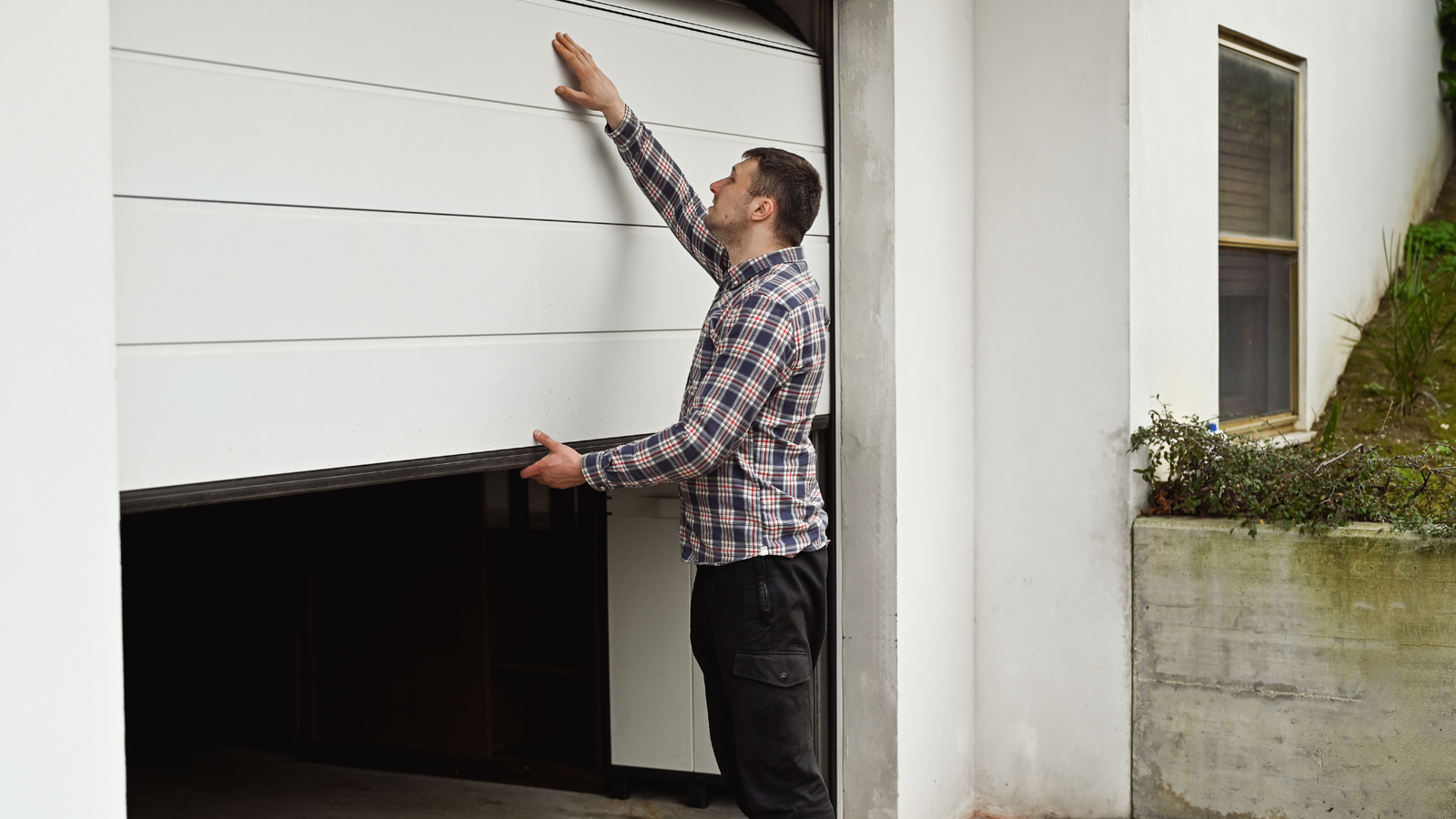

Fix It Fast: What to Do When Your Garage Door Bounces When Closing
If your garage door bounces when closing, jerks, or suddenly reverses for no clear reason, it can be confusing and frustrating. It is also a real safety concern, especially if kids, pets, or your car are nearby.
Let’s walk through the most common causes of a shaking garage door and how to tell when you can safely check things yourself and when you should call a professional in League City, Texas for help.
Why Your Garage Door Bounces When Closing
When a garage door bounces back up instead of staying closed, it usually means your garage door system is sensing a problem or fighting a mechanical issue.
Here are the common causes of a garage door that bounces, shakes, or jerks when closing or opening:
- Problems with the safety sensor or two sensors being misaligned
- Issues with the garage door springs (torsion or extension springs)
- Damaged rollers or misaligned garage door tracks
- Loose screws or bolts in hinges, brackets, or the track
- Worn pulleys or cast iron pulleys that are failing
- An opener force setting that is too sensitive or not sensitive enough
- Debris, dust, or rust along the door’s path that disrupt the smooth movement
Any of these can cause the door to jerk, stop, or even cause the door to reverse when it is almost shut.
Garage Door Service Basics: How the Door Moves
To understand why a door bounces, it helps to know the basic structure of the door and how the door moves.
Your garage door’s weight is supported by:
- Garage door springs: Either torsion springs above the door or extension springs along the sides
- Garage door rollers: Small wheels that ride inside the garage door tracks
- Pulleys and cables: Often with a press fit pulley or cast iron pulleys that help lift the door
- Hinges and brackets: Metal parts secured with each screw and bolt
The garage door opener provides the force, but the springs, tracks, rollers, and pulleys do most of the lifting and balancing. If any door parts are worn, misaligned, or loose, it can easily disrupt the smooth operation and cause the door to behave oddly.
Common Reasons for Garage Doors That Bounce or Shake
Safety Sensor or Photo Eye Problems
A safety sensor monitors the door’s path to prevent it from closing on a person, pet, or car. Most modern garage doors have two sensors placed near the floor on each side of the track.
If these are misaligned or dirty, your door might close partway, then the door bounces back up instead of staying closed.
Signs the sensors are the problem:
- Door starts to close, then the door bounces back up instead of staying closed
- Small indicator light on one or both sensors is off or blinking
- You see dust, cobwebs, or debris on the lenses
What to do:
- Gently clean each sensor lens with a soft cloth to remove dust.
- Make sure both sensors are properly aligned and facing each other.
- Tighten any loose screws on the mounting brackets.
- Test the door using the door remote and wall button.
If a misaligned sensor keeps the door from closing after you clean and align them, that is a garage door issue that usually needs a pro to fix the problem safely.
Damaged Rollers or Misaligned Tracks
A garage door that jerks or a shaking garage door often points to trouble with the rollers or garage door tracks.
Look for:
- Cracked or chipped rollers
- Rollers that wobble or bind in the track
- Bent or misaligned tracks
- Rust, debris, or a lack of lubrication on the rollers or hinges
When rollers are not moving freely, they can cause the door to jerk or the door bounces as it tries to pass a tight spot.
Quick check:
- With the door fully closed, pull the emergency release and move the door manually.
- If the door feels heavy, catches, or grinds, there may be damaged rollers or track problems.
- Make sure the rollers are properly seated in the tracks and the tracks are properly aligned with the door.
Do not attempt to bend tracks back into shape with a random tool. That can cause more damage or create a serious safety concern.
Issues With the Springs and Pulleys
The torsion and extension springs carry much of the door’s weight. Over time, springs and pulleys wear out, lose tension, or break.
Common signs of issues with the springs or pulleys:
- Garage door jerks when closing or opening
- The door gets stuck partway down and then bounces
- A loud bang from the garage that sounds like something snapped
- Gaps in torsion springs or sagging extension springs
- Cables loose on one side, causing the door to hang crooked
Specific pulley issues, like worn bearings or old cast iron pulleys, can cause the door to jerk and may keep the door from closing smoothly.
Any spring repair or attempt to fix pulley problems should be left to a trained technician. Springs are under high tension (physics at work here) and can cause serious injury if handled incorrectly.
Loose Screws or Bolts and General Wear
Over time, vibration and normal use will loosen screws or bolts that hold brackets, hinges, and tracks in place. That can change the alignment, causing the door to rattle, shake, or bounce.
Loose bolts or brackets can also affect the structure of the door and the door’s operation in general.
Areas to inspect:
- Hinges between door panels
- Track brackets mounted to the wall or ceiling
- The opener rail connection above the door
If you are comfortable, you can lightly tighten any accessible loose screws or bolts with the right tool, but never adjust the torsion springs or their anchor hardware.
Opener Force Setting and Built-in Safety
Your garage door opener has a built-in safety feature that uses a force setting. If the opener feels too much resistance while the door is opening or closing, it will cause the door to reverse to avoid injury or damage.
If the force is set incorrectly, even small friction from dirt, dust, or minor misalignment can cause the door to reverse or bounce.
This is a common issue on older units, including some LiftMaster models, and can show up when a garage door jerks when opening or the door bounces at the bottom.
Adjusting the force setting is usually something a professional should handle, especially if you notice:
- The door feels heavy when moved by hand
- Jerking garage doors behavior that is getting worse
- The door opens, then the door bounces back up instead of staying closed
Troubleshooting Tips: What You Can Safely Check
There are a few basic troubleshooting steps homeowners in League City can take before you call a professional.
Visual Troubleshooting Checklist
Use basic garage door troubleshooting tips to inspect your door safely:
- Look at the tracks and rollers
- Check for dents, bends, or visible debris.
- Confirm rollers are properly seated and able to roll smoothly.
- Check for dust, debris, and rust
- Clean out any dirt or obstruction along the door’s path with a brush or vacuum.
- Pay attention to noise during operation; grinding or squealing can be a clue.
- Test the door manually
- Disconnect the opener and lift the door manually.
- If the door feels unusually heavy or drops quickly, there may be issues with the springs.
- If the door moves in a jerky way, a mechanical issue is likely.
- Inspect the sensors
- Make sure the two sensors are level, clean, and facing each other.
- Ensure nothing is blocking the beam, including car bumpers, yard tools, or storage items.
- Lubricate moving parts
- Use a quality garage door lubricant on hinges, rollers, and bearings, not on the tracks themselves.
- Proper lubrication helps maintain smooth movement and reduce noise.
If the garage door keeps bouncing or jerking after these steps, it is time to call a professional.
When Your Garage Door Jerks When Opening or Closing
A garage door that jerks is more than annoying. It usually means something is off-balance or misaligned.
Some common reasons for garage doors that jerk or shake include:
- Misaligned tracks causing the door to bind
- Worn bearings in pulleys
- A belt (mechanical) that is too loose or too tight on the opener
- Weight distribution problems from damaged panels
- Debris stuck in the tracks, causing the door from closing smoothly
Any of these can cause the door to jerk suddenly or stop, especially near the bottom, leading to the feeling that the door bounces.
If your door jerks when closing or opening and you are not sure why, it is safer to leave it closed and contact a local expert rather than continue to operate it.
Why A Bouncing Door Is A Real Safety Concern
A garage door that bounces or reverses instead of staying closed is not just inconvenient. It can be dangerous.
- The door might reverse unexpectedly when your car is half in or out of the garage.
- Kids or pets could be in the way when the door changes direction.
- A failing spring or pulley can snap without warning, causing significant damage.
Your garage door is one of the largest moving objects in your home, and it holds a lot of weight and tension. Treat any unusual behavior as a sign that it needs professional attention.
How Professional Garage Door Service Helps
A trained technician can:
- Carefully inspect springs, cables, pulleys, and the opener system
- Adjust the tension on torsion springs and extension springs correctly
- Replace damaged rollers or misaligned hardware
- Set your opener force level correctly for a tight seal at the floor
- Confirm all door parts are safe and properly aligned
If you need professional garage door repair, you can learn more here: professional garage door repair.
They will help get your garage door working like it should so the door moves smoothly, closes properly, and does not randomly bounce back up.
When To Call A Professional (And When Not To DIY)
You should call a professional in League City, Texas if:
- The door bounces every time it closes, even after cleaning the sensors
- The door opens partway, then closes, or the garage door opens then immediately closes in a loop
- You notice broken cables, gaps in springs, or a visibly broken torsion spring
- You hear loud banging noises or see the door hanging crooked
- The opener hums, but the door does not move properly
Do not attempt to fix springs, adjust the tension on torsion springs, or perform complex spring repair on your own. The force involved can cause severe injury.
Homeowners can usually:
- Clean photo eyes
- Clear debris from tracks
- Lightly lubricate hinges and rollers
- Gently tighten non-spring-related hardware
For anything deeper, especially involving weight, tension, or structural parts, leave it to experienced technicians.
Conclusion: Get Your Garage Door Back To Smooth Operation
If your door bounces, shakes, or jerks – or your garage door jerks when opening or closing – it is your system’s way of telling you something is off.
You can:
- Do a basic visual check
- Clean and align the sensors
- Lubricate hinges and rollers
- Move the door manually to feel for sticking or grinding
But when the problem involves springs, pulleys, serious misalignment, or persistent bouncing, do not attempt to fix complex components yourself. It is safer and usually cheaper in the long run to call precision garage door level experts who know exactly how to handle these systems.
Pay attention to your door’s behavior. Early action can prevent a minor garage door issue from turning into a major malfunction, helping you protect your home, your car, and your family – and get your garage door back up to a safe, reliable, and smooth operation.