
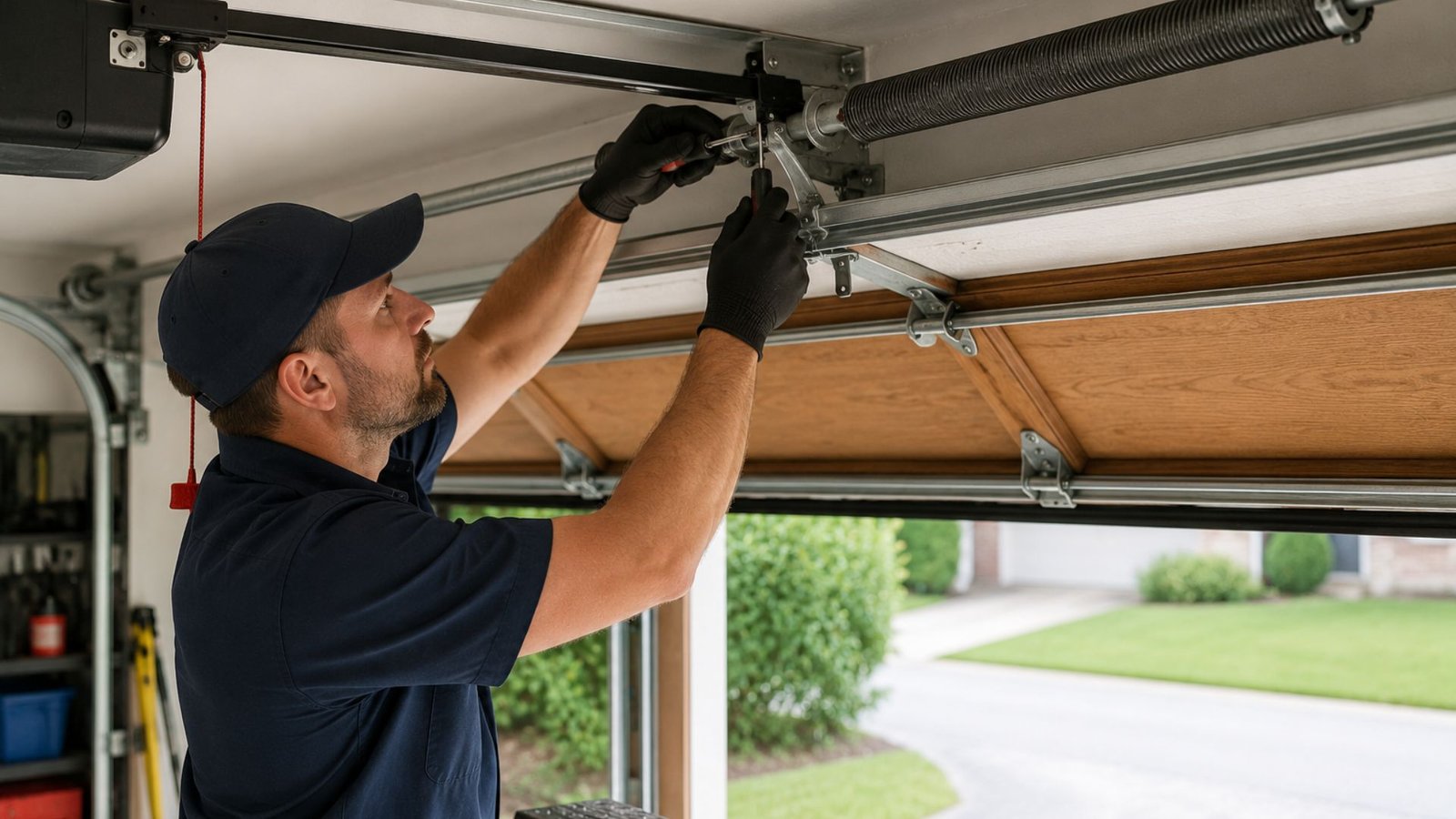

Why Your Garage Door Reverses When Closing and How to Fix It Fast
There is nothing more frustrating than watching your garage door start to close, then suddenly reverse back up for no obvious reason. It happens to a lot of homeowners, and while it can feel like the door has a mind of its own, there is almost always a clear explanation behind it.
The good news is that many of the causes are things you can investigate yourself. Some fixes are quick and easy. Others will require a professional. Either way, understanding what is happening is the first step toward solving it.
What Causes a Garage Door to Reverse When Closing?
Your garage door is designed with safety in mind. When it detects something that might cause damage or injury, it is programmed to stop and reverse. That is a feature, not a flaw. However, when the door reverses without any real obstruction, something in the system is giving it a false signal.
Here are the most common culprits behind a garage door that reverses when closing.
Misaligned or Dirty Safety Sensors
The photo-eye sensors located near the bottom of your door tracks are the most frequent cause of unwanted reversals. These sensors send an invisible beam across the opening of your garage. If that beam is broken or blocked, the garage door opener interprets it as an obstruction and reverses the door to prevent injury.
The sensor lights are your first clue. A solid green light on one side and a solid amber light on the other means they are properly aligned. If either light is blinking or off, the sensors are not communicating correctly.
Sensor issues are often simpler than they look. A few common causes include:
- Dirt, dust, or a spider web covering the sensor lens
- Debris sitting directly in the sensor’s path
- One sensor getting bumped out of alignment
- Sunlight shining directly onto the sensor lens and interfering with the beam
Cleaning the lenses with a soft cloth and realigning the sensors to face each other directly often resolves the problem. Sunlight interference can be tricky since it tends to happen only at certain times of day. If the door reverses consistently in the afternoon, sunlight hitting the sensor at a low angle could be the cause.
Limit Switch Settings That Need Adjustment
The limit switch tells your garage door opener how far the door needs to travel before it is fully closed. If this switch is set incorrectly, the door may touch the ground and interpret that contact as hitting an obstacle, which causes it to reverse.
On older openers, you adjust the limit switch using small dials or screws on the side or back of the motor unit. Turning the down-limit adjustment in small increments is usually all it takes.
On newer openers, the limit settings are programmed electronically through the control panel. Check your opener’s manual for the right process.
Worn or Broken Springs and Cables
Your garage door is heavy, and the spring system is what makes it easy to lift and lower. When a spring or cable is worn, the door becomes unbalanced. The opener struggles to bring it down smoothly, and the internal resistance sensors detect that strain and trigger a reversal.
If your door is reversing and you hear unusual sounds like grinding, popping, or scraping, the issue may be mechanical rather than electronic. A broken spring is not a DIY repair. These components are under extreme tension and can cause serious injury if handled incorrectly.
Obstacle Detection Sensitivity May Be Set Too High
Most garage door openers have an adjustable sensitivity setting for detecting resistance. If this is set too sensitive, the door may reverse even when it encounters minor friction from the tracks or weather sealing.
This setting is usually labeled as “force” or “pressure” on the opener unit. Adjusting it carefully in small increments can help. However, do not set it so low that the door fails to stop when something is actually in the way. Safety comes first.
A Damaged Motherboard Inside the Opener
If you have checked the sensors, limit switch, and mechanical components and everything looks fine, the problem may be internal. The motherboard inside the garage door opener controls all the signals and responses. If it is damaged or malfunctioning, it can send incorrect commands that cause the door to reverse unpredictably.
A damaged motherboard is not something you can repair on your own. At that point, the opener either needs a replacement circuit board or a full unit replacement.
How to Start Troubleshooting the Problem
Before calling anyone, run through these checks:
- Look at both sensors near the bottom of the door tracks and check that the indicator lights are solid, not blinking.
- Wipe the sensor lenses clean with a dry cloth and remove any debris from the area.
- Check whether sunlight is shining directly into a sensor at the time the problem occurs.
- Listen for unusual mechanical sounds when the door operates.
- Test the door manually by disconnecting the opener and pulling the release cord. If the door moves smoothly by hand, the mechanical system is likely fine.
These steps help you narrow down whether the issue is with the sensor, the switch, the mechanics, or something deeper inside the opener.
When to Call a Professional
Some issues are easy enough to handle yourself. Cleaning sensors and adjusting sensitivity settings are reasonable DIY tasks. But anything involving spring tension, cable replacement, or internal opener components should go to a licensed technician.
A professional can also quickly identify problems that might not be obvious during basic troubleshooting, including issues with the track alignment, roller wear, or a failing opener circuit board.
If your garage door has been reversing repeatedly and none of the basic fixes have worked, it is time to get an expert involved before the problem gets worse or creates a safety hazard.
Fix a Garage Door That Reverses When Closing
A reversing garage door is frustrating, but it is almost always fixable once you understand what is causing it. Start with the sensors and work your way through the checklist before assuming the worst. If the problem persists or involves mechanical components, do not take chances.
Reach out to the team at Level Up Garage Door for fast, professional garage door repair from licensed technicians who know these systems inside and out. Getting it fixed right the first time is always worth it.