

Garage Door Belt Moves, But Door Won't Open? The Trolley Might Be The Culprit
You hit the button. The garage door opener hums, the belt starts moving, and… nothing. The door just sits there like it has no intention of going anywhere. This is one of the more confusing garage door problems because everything sounds like it’s working. So what’s actually going on?
In most cases, the culprit is the trolley – the small but critical component that connects the belt to the door itself.
This particular symptom, the belt moving while the door stays put, almost always traces back to the trolley. If your situation sounds slightly different, say your opener hums but the chain doesn’t move at all, or your door won’t open even though the motor is clearly running, the underlying cause is probably different from what we’re covering here.
Quick Checklist Before You Troubleshoot Further
Before digging into the details, run through this fast checklist. It covers the most common reasons a garage door belt moves, but the door won’t budge, in the order you should check them:
- Check the emergency release cord. If it’s hanging in the disengaged position, that’s very likely your answer. Full steps are below.
- Disconnect the opener and try lifting the door by hand a few inches. If it feels normal, the problem is mechanical. If it feels unusually heavy or won’t budge at all, stop right there. A proper spring tension check is worth doing before you touch anything else, since that points to a broken spring and not a DIY fix.
- Look at both ends of the door arm. A loose or disconnected arm is an easy, visible fix if nothing is bent or broken.
- Listen for grinding while the opener runs. That usually means the drive gear is worn, not just the trolley.
If none of these point to an obvious answer, the sections below walk through each possibility in more detail.
What the Trolley Actually Does
The trolley, sometimes called a carriage, rides along the rail above your garage door and is responsible for physically pulling or pushing the door open and closed. The belt drives the trolley, and the trolley moves the door. Simple chain of events – until that chain breaks.
If the belt is moving but the door is not, the trolley has likely disconnected from the door arm.
This can happen gradually through wear, or all at once if something forced the door while the opener was engaged.
The Most Common Reason: The Emergency Release Cord
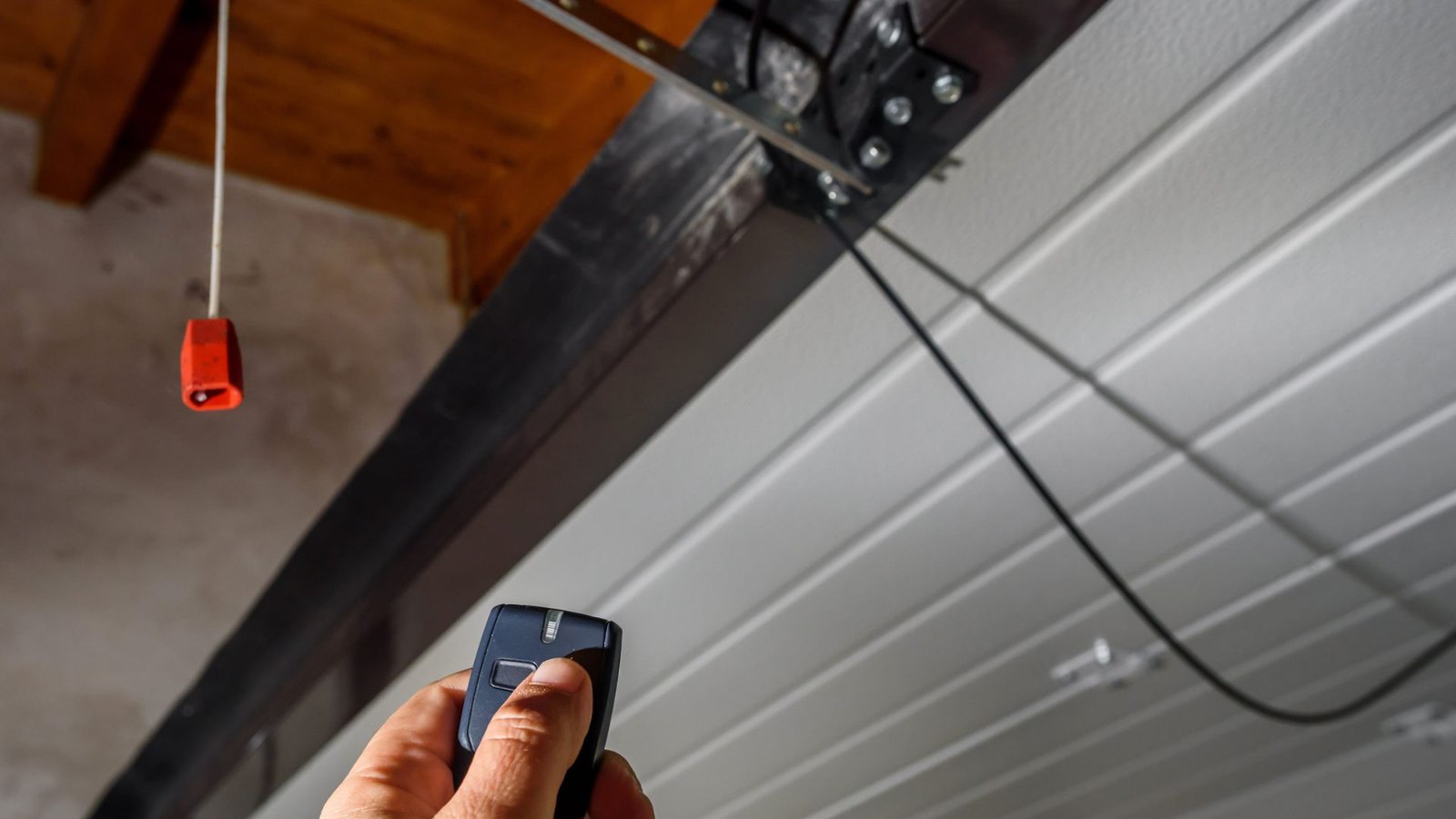
Here’s something that catches a lot of homeowners off guard. Every residential garage door opener has a red emergency release cord hanging from the trolley. Pulling it disconnects the trolley from the belt drive system so you can operate the door manually during a power outage.
If that cord was pulled – accidentally or on purpose – the trolley is now in bypass mode. The belt will spin freely, but the door won’t move an inch. This is actually the most common explanation when the belt moves but the door stays put.
Re-engaging the trolley is usually straightforward. You pull the release cord back toward the opener (away from the door), then manually move the door until you hear or feel the trolley click back into position. From there, the opener should take over again. If you want a fuller walkthrough, our guide on fixing the garage door emergency release covers a few edge cases this quick version doesn’t.
When It’s Not the Emergency Release
If re-engaging the trolley doesn’t fix it, the problem may run deeper. Here are a few other possibilities worth considering during troubleshooting:
- Stripped or broken trolley carriage – The plastic components inside the trolley can wear down over time, especially in older openers from brands like the Overhead Door Company or Hollywood-Crawford Door Co. When the gear inside strips out, the belt has nothing to grip.
- Worn drive gear – The gear that connects the motor to the belt can strip out, causing the motor to run without actually moving anything. You might notice a grinding noise during operation, and if your garage door has been getting loud in general and not just during this stall, a worn gear could be part of a bigger pattern. This is a sign the gear needs replacement, not just adjustment.
- Disconnected door arm – The arm that links the trolley to the door itself may have come loose at one of its connection points. Check both ends of the arm to see if anything is bent, broken, or unlatched.
- Sensor or electrical issues – In some cases, the opener’s motherboard, capacitor, or electrical wiring may cause erratic behavior that mimics a trolley problem. A faulty sensor could also be signaling the opener to stop before it fully engages.
A Word on Torsion Springs
It is worth mentioning that if your torsion spring is broken, the door may feel impossibly heavy when you try to move it manually. The spring counterbalances the door’s weight, and without it, even a properly functioning trolley cannot do much. Attempting to force a door with a broken torsion spring is a real injury risk – this is not a DIY repair.
Our breakdown of the dangers of garage door springs goes into exactly why this particular repair carries so much risk, if you want the full picture.
Writer and home improvement expert Chris Deziel has noted in various guides that torsion spring repairs should always be left to a qualified technician due to the tension involved. That advice holds true anywhere.
Should You Try to Fix It Yourself?
Re-engaging the emergency release is safe and simple. Inspecting the door arm for obvious disconnects is also reasonable. But once you start getting into the drive gear, the trolley carriage internals, the motherboard, or anything involving the screw drive or torsion spring system, the complexity and risk go up quickly.
A licensed technician can diagnose the problem accurately and have your door moving again without the guesswork. If you want a general sense of what that runs before you call, our garage door repair cost breakdown covers typical pricing.
Frequently Asked Questions
Can I fix a disconnected trolley myself?
Yes, in most cases. If the emergency release cord was pulled, re-engaging it is a simple, safe DIY fix. If the trolley itself is physically broken or stripped, that’s a different story and usually calls for a replacement part.
How do I know if it’s the drive gear and not just the trolley?
Listen while the opener runs. A trolley in bypass mode is usually quiet since the belt just spins freely. A worn or stripped drive gear typically grinds or makes a rough mechanical noise as it struggles to grip.
What’s the difference between a torsion spring and an extension spring?
They counterbalance the door’s weight differently and carry different risks. Our comparison of torsion springs versus extension springs breaks down how each type works and why torsion springs in particular require so much caution.
Is it safe to keep using the opener if the belt moves but the door doesn’t?
No. Repeatedly triggering the opener while the door is disconnected or stuck can strain the motor and gear system further, and it can mask a spring problem that’s dangerous to ignore.
Will lubricant fix a stripped or grinding drive gear?
No. Lubrication helps with normal wear and noise prevention, but it won’t repair a gear that’s already stripped or a trolley carriage that’s cracked. Those need physical replacement.
What to Check When Your Garage Door Belt Moves but the Door Won’t Open
A moving belt with a stuck door almost always points to the trolley, but the root cause can vary.
Start with the emergency release cord, check the door arm connections, and listen for unusual noise from the opener. If the problem is not obvious or involves components like the torsion spring, gear system, or electrical wiring, it is time to call in a professional. For dependable garage door repair in League City, the team at Level Up Garage Door is ready to diagnose and fix the issue right the first time.