
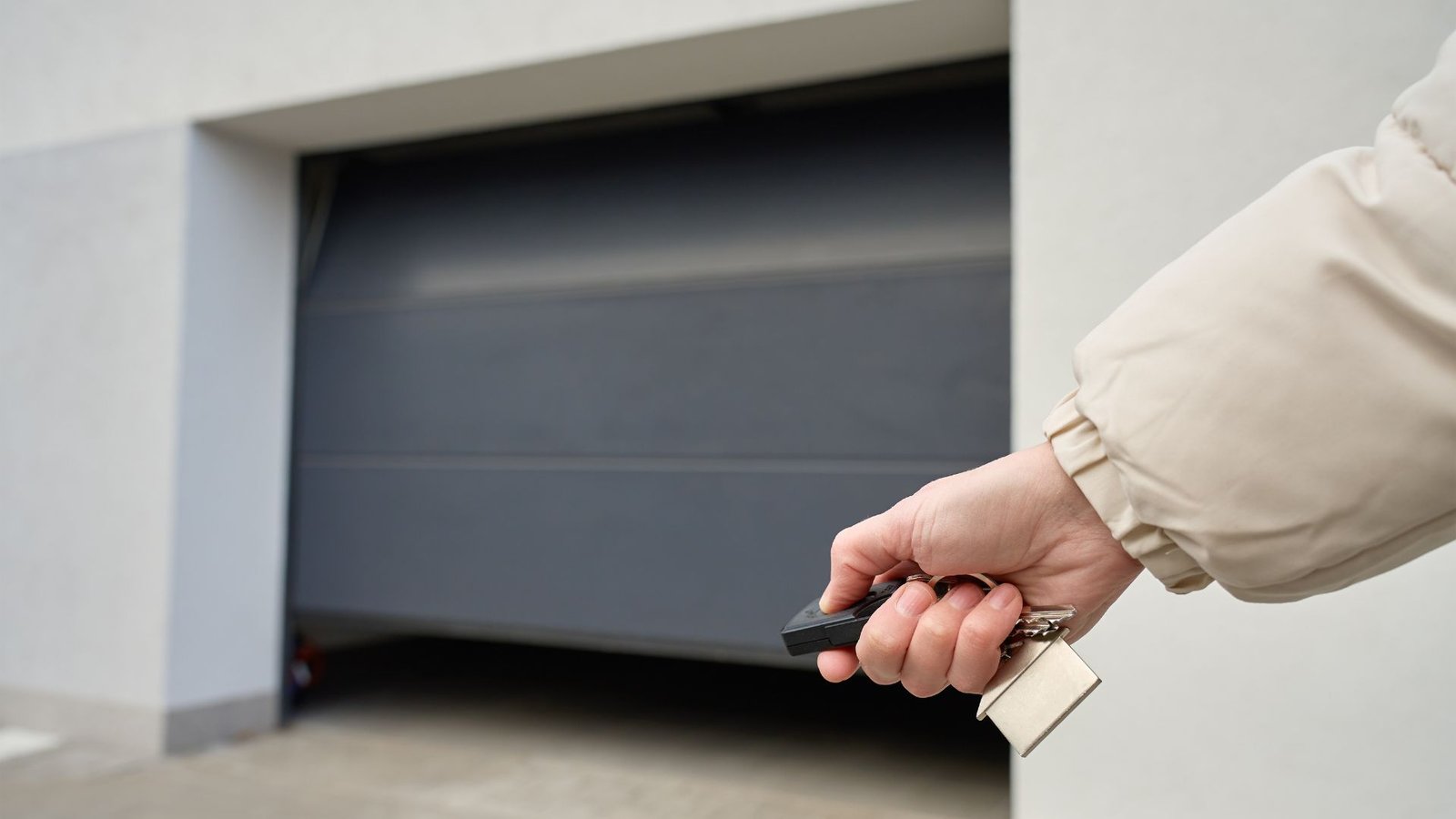

Garage Door Closes Too Hard? Check the Force Setting
There is a specific sound a garage door makes when something is wrong. It is not a creak or a rattle – it is a heavy, jarring slam that shakes the floor and rattles the walls. If your garage door closes too hard, most homeowners assume the door is just getting old. The real culprit, more often than not, is the force setting on your garage door opener.
Understanding what that means – and why it matters – can save you from a costly repair or, worse, a safety hazard that puts your family at risk.
What Is a Force Setting on a Garage Door Opener?
Your garage door opener is not just a motor that pulls a door up and down. It is a calibrated system that controls how much energy the motor applies when opening and closing the door. That calibration is called the force setting.
When the force setting is too high, the opener pushes the door down with more power than needed. The result is a door that slams shut rather than gliding smoothly into place. Over time, that kind of repeated impact causes wear on nearly every component connected to the door.
Why the Force Setting Gets Out of Calibration
Force settings do not usually shift on their own overnight. Several things can push them out of balance.
Increased friction along the tracks is one of the most common causes. When the tracks are dirty, bent, or lacking proper lubrication, the opener has to work harder to move the door. If the opener was adjusted to compensate for that friction and then the friction was reduced – say, after a tune-up – the force setting is now too aggressive for the current conditions.
Changes in the weight of the door also matter. A residential garage door is heavy by design, and its weight is carefully counterbalanced by torsion springs or extension springs. If a spring weakens or breaks, the counterweight system is off, and the opener compensates by applying more force. That extra force is what creates the hard close.
The Role of Springs, Friction, and Gravity
To understand why a door closes too hard, it helps to understand the basic mechanics at play.
A garage door works against gravity every time it opens. Torsion springs – the large coiled springs mounted above the door – store energy when the door closes and release that energy to help lift the door when it opens. This torsion system is what makes a heavy door feel manageable.
When those springs are worn, rusted, or out of adjustment, the counterweight they provide is reduced. The door becomes effectively heavier on the way down, and gravity takes over more than it should. The opener force setting, if not recalibrated, will mirror that imbalance and slam the door shut.
Friction plays a role in the opposite direction. A door with dry, rusted hinges and neglected tracks creates resistance that slows the door. When the force setting is high enough to push through that friction and the friction is suddenly gone – after applying lubricant during maintenance, for example – the door drops harder and faster than expected.
How Wear and Rust Compound the Problem
This is where things get a little sneaky. Wear and rust tend to build up gradually, so homeowners adjust to small changes over time without noticing them. A hinge that is slightly rusted adds a little drag. A track that has shifted slightly adds a little more. The opener force gets bumped up little by little to keep up.
Then one day you get a home inspection or a maintenance visit, and a technician lubricates everything, realigns the track, and replaces a worn hinge. Suddenly, the door closes like it is being pushed by a much stronger force than before – because it is. The opener was tuned for a door with more resistance, and now that resistance is gone.
Why a Hard-Closing Garage Door Is a Real Safety Risk
This is not just about noise or inconvenience. A garage door that closes too hard is a genuine hazard.
The door itself can weigh anywhere from 130 to over 400 pounds depending on the material and size. When that weight comes down with excess force, the risk of injury to a person, a pet, or even a car in the way becomes significantly higher. The safety reversal feature on modern openers – the system that stops and reverses the door if it hits an obstacle – may not activate fast enough if the force setting is masking the resistance it is designed to detect.
Beyond injury, the repeated impact causes structural damage. Panels crack. Hinges bend. Bottom seals get crushed. In an ADU or a home with an attached garage, the vibration from a hard-closing door can even affect the walls and framing over time.
The Safety Reversal Test You Should Know About
Most garage door openers have a built-in safety reversal mechanism. You can test it by placing a flat 2×4 board on the ground in the door’s path. When the door hits the board, it should immediately reverse direction.
If it does not reverse – or if it reverses slowly – the force setting is too high. That is not a minor adjustment. That is a failure in the system that is specifically designed to prevent injury.
How to Identify If the Force Setting Is the Problem
Before calling a technician, there are a few things you can observe on your own.
Watch how the door behaves at the very end of its closing cycle. Does it slow down and settle gently? Or does it drop the last few inches and hit the floor hard? A properly calibrated door should decelerate near the bottom and close with control.
Listen for a difference in sound between opening and closing. If the door opens smoothly but closes with a bang, that asymmetry points directly to the close-force setting rather than a mechanical issue affecting both directions.
Also check the door balance manually. Disconnect the opener by pulling the red emergency release cord, then lift the door by hand to about waist height and let go. A balanced door will stay roughly in place. If it drops fast, the torsion spring or extension springs are not providing enough counterweight, and the opener is compensating with force.
What Actually Fixes a Garage Door That Closes Too Hard
The fix depends on what is causing the problem, but it usually involves one or more of the following adjustments.
Recalibrating the force setting is often the first step. On most openers, there are two adjustment dials or screws labeled “open force” and “close force.” Reducing the close-force setting by small increments – testing the door after each adjustment – is the safest approach. However, if you reduce the force too much, the door may not close completely, especially in cold weather when metal contracts and friction increases slightly.
Lubricating and servicing the moving parts removes the friction that may have caused the force setting to be inflated in the first place. Hinges, rollers, and tracks all benefit from appropriate lubricant applied during routine maintenance. This should be part of any regular garage door maintenance plan.
Inspecting and adjusting the springs is critical if the door fails the balance test. Torsion spring adjustment is not a DIY task. The springs are under extreme tension, and a failure during adjustment can cause serious injury. This is work that should be handled by a licensed technician.
Checking the close-limit setting is sometimes confused with the force setting, but they are different. The limit setting tells the opener how far to travel before stopping. If the limit is set so the door tries to travel past the floor, the motor keeps pushing and slams the door down. Adjusting the limit so the door stops exactly at the floor can eliminate the hard close without touching the force setting at all.
Frequently Asked Questions
Can I adjust the force setting myself?
You can make minor adjustments to the force setting using the dials or screws on your opener unit. However, if the root cause is a spring imbalance, a bent track, or excessive wear, adjusting the force setting without addressing those issues is a temporary fix. It may also reduce the effectiveness of the safety reversal feature.
How often should garage door force settings be checked?
Force settings should be checked as part of an annual maintenance visit. Changes in season, spring tension, and track condition can all affect how the opener performs over time.
Is a hard-closing door covered under a warranty?
That depends on the age and brand of your opener. Some manufacturers include coverage for force-setting failures, but wear-related issues are typically excluded. A professional inspection can help determine whether a repair qualifies under any existing warranty.
What if my garage door slams even after adjusting the force setting?
If recalibrating the force and limit settings does not resolve the problem, the issue is almost certainly mechanical – usually the springs, tracks, or rollers. At that point, a professional diagnosis is the safest and most cost-effective path forward.
Does weather affect how hard a garage door closes?
Yes. Extreme heat can cause metal components to expand, which changes friction levels and spring tension. Cold temperatures can do the opposite. Doors that close harder in winter or summer often have springs or force settings that are calibrated for average conditions and need seasonal adjustment.
What to Do If Your Garage Door Closes Too Hard
There is a threshold where DIY troubleshooting stops being useful and starts being risky. If the door fails the balance test, if the springs show visible rust or damage, or if the safety reversal test fails repeatedly, those are not situations to work through on your own.
Torsion springs in particular store an enormous amount of energy. A spring failure during a DIY adjustment is not just a property damage risk – it is a genuine injury risk. The same goes for any work involving the cable drums or bottom brackets, which are under significant tension even when the door appears to be at rest.
A licensed technician can diagnose whether the problem is the opener, the springs, the tracks, or a combination of factors – and calibrate everything so the door closes safely and quietly.
Conclusion
A garage door that closes too hard is not just an annoyance – it is a warning sign worth taking seriously. The force setting is usually where the problem starts, but springs, friction, wear, and lubrication all play a role in the bigger picture. Catching the issue early protects your door, your home, and the people in it. If your door is slamming and you want it properly diagnosed and fixed, explore professional garage door repair services to get it back to working the way it should.