
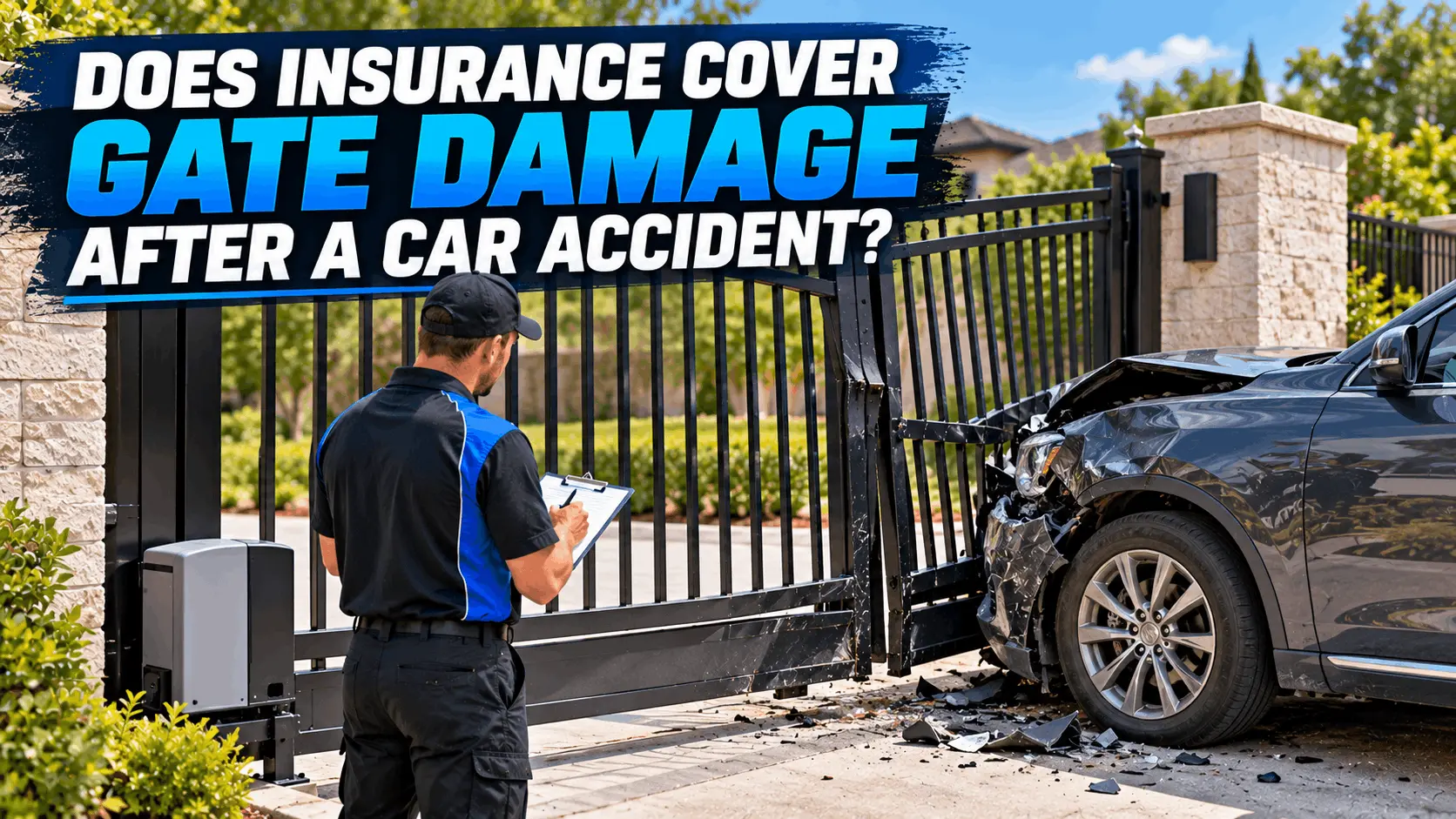

Does Insurance Cover Gate Damage After a Car Accident?
If a vehicle hits your driveway gate, you may wonder, does insurance cover gate damage after a car accident? The answer depends on who was at fault, which insurance policies apply, and the extent of the damage. A collision can bend gate panels, damage posts and hinges, affect the automatic gate opener, or create safety concerns that require professional inspection.
The answer depends on who caused the accident, which insurance policies apply, the extent of the damage, and the terms of the policies involved. In many situations, the at-fault driver’s auto insurance may help pay for damage to someone else’s gate. If the driver damages their own gate, the situation can be more complicated.
Understanding the possible coverage options, documenting the damage, and obtaining a professional assessment can help you navigate the claims process more effectively.
Does Car Insurance Cover Gate Damage After an Accident?
Car insurance may cover gate damage when a vehicle strikes a gate and the driver is legally responsible for the accident. In the United States, property damage liability coverage generally helps pay for damage the insured driver causes to someone else’s property, subject to policy limits and applicable law.
For example, if a driver accidentally backs into a neighbor’s driveway gate, their property damage liability coverage may help pay for the necessary repairs. The insurer will review the circumstances, determine responsibility, and evaluate the damage before deciding what the policy covers.
Coverage is not automatic in every situation. The driver’s policy must apply to the accident, the claim must meet the policy requirements, and the available coverage limits must be sufficient. If the damage exceeds those limits, the property owner may need to explore other options.
If your gate has been struck by a vehicle, document the damage and contact the relevant insurer before authorizing major repairs, unless immediate action is necessary to address a safety hazard.
Which Insurance Policy Pays for Gate Damage?
The insurance policy that may pay for gate repairs depends largely on who owns the damaged property and who caused the accident. Understanding the difference between auto liability coverage, homeowners insurance, and collision coverage can help you determine which claim to discuss with your insurer.
1. The At-Fault Driver’s Auto Liability Insurance
When a driver hits someone else’s gate and is found legally responsible, their property damage liability coverage may pay for the damage. This can include repair or replacement of damaged gate panels, hinges, posts, tracks, and other components when those costs are covered by the claim.
The insurer may request photographs, an accident report, information about the driver, and a repair estimate. It may also arrange an inspection before approving the work.
If the driver has insufficient coverage or no applicable insurance, recovering the full repair cost may require other options. The outcome depends on the circumstances, policy limits, and applicable law.
2. Your Homeowners Insurance
If a vehicle damages a gate on your own residential property, your homeowners insurance may provide coverage depending on the policy and the circumstances of the accident. The gate’s classification, its relationship to the insured property, and the policy’s exclusions and limits may affect the decision.
For example, a gate attached to a covered structure or a separate driveway gate may be treated differently depending on the policy wording. You should not assume that every gate is covered under the same provision.
Your insurer can explain whether the damage qualifies under your policy, what deductible applies, and whether filing a claim makes sense.
For more information about how property insurance may respond to different types of damage, read our guide on whether homeowners insurance covers garage door damage. Gate coverage can differ, so always confirm the terms of your own policy.
3. Your Own Auto Collision Coverage
If you accidentally drive into your own gate, collision coverage under your auto policy may help pay for damage to your vehicle. However, collision coverage generally addresses damage to the insured vehicle, not automatically the separate gate on your property.
Your homeowners policy may provide a separate route for claiming damage to the gate, depending on its terms and the circumstances. Both policies may have separate deductibles, exclusions, and claim requirements.
Contact your auto and homeowners insurers to explain exactly what happened. They can clarify which policy, if any, may cover the vehicle damage and which may apply to the gate.
What Types of Gate Damage May Be Covered?
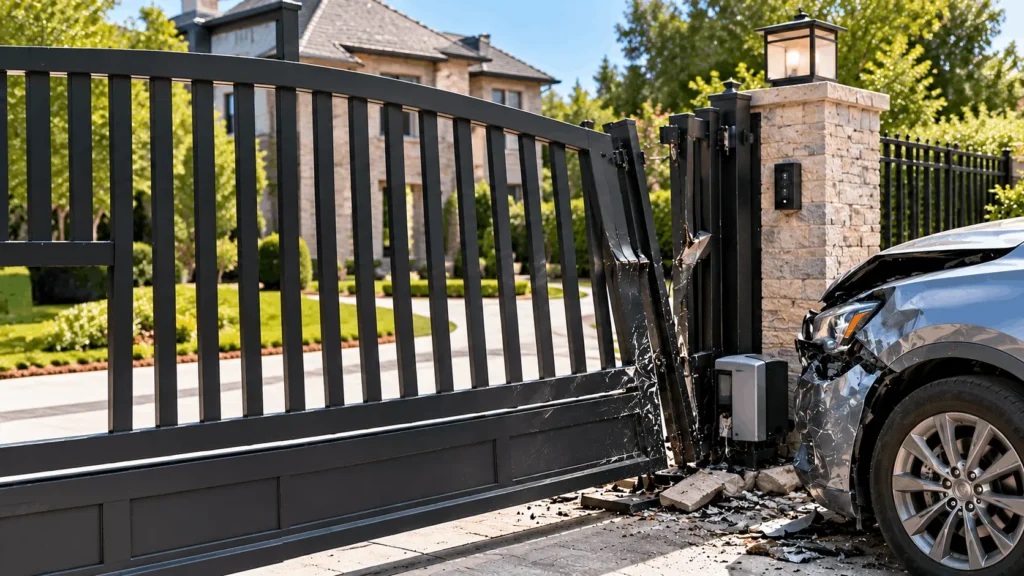
A vehicle impact can damage several parts of an automatic gate system. The visible damage may be limited to one section, or the collision may affect the gate’s supporting structure and operating mechanism.
The following types of damage may be considered during an insurance assessment, depending on the cause and policy coverage.
Bent Gate Panels or a Damaged Gate Frame
A direct impact can bend metal panels, distort the frame, or damage welds and joints. Even when the gate still moves, structural damage may affect its alignment and stability.
A technician can assess whether the damaged section can be repaired or whether replacement is necessary. The insurer may request an estimate that explains the scope of the work.
Broken Posts, Hinges, or Mounting Hardware
The force of a collision can damage gate posts, loosen mounting hardware, bend hinges, or affect the foundation supporting the gate. These problems can make the gate unstable and unsafe to operate.
Do not try to straighten a damaged post or force a heavy gate back into position. A professional inspection can help identify hidden structural damage and determine which repairs are required.
Damaged Tracks, Rollers, or Gate Operators
Sliding gates may experience track or roller damage, while swing gates may suffer damage to hinges, operator arms, or mounting brackets. A collision can also affect the automatic gate motor or access-control components.
The fact that the motor still runs does not mean the gate is safe to use. Operating a gate with damaged structural or mechanical components can cause further damage and create a safety hazard.
Electrical and Access-Control Damage
An impact near the gate operator, keypad, wiring, or access-control equipment may affect electrical connections or system communication. These components should be checked by a qualified technician if they have been struck or appear damaged.
Whether these repairs are covered depends on the claim and the applicable policy. Ask the insurer whether the estimate should include inspection and testing of the full gate system.
What If the Driver Who Hit Your Gate Leaves the Scene?
If a vehicle damages your gate and the driver leaves without providing information, the claim process may be more difficult. However, you can still document the incident and contact your insurer to discuss your options.
Start by photographing the damage and the surrounding area. If you have security-camera footage, preserve the original recording. Ask nearby property owners or witnesses whether they observed the accident, and obtain any available vehicle details.
Report the incident to the appropriate authorities when required or when doing so may help establish what happened. Keep a copy of any report or incident reference number.
Contact your homeowners insurer to ask whether your policy may cover the damage. If the driver is identified later, their insurance may also become relevant. Coverage for an unidentified or uninsured driver damaging property varies by policy and jurisdiction, so do not assume a claim will automatically be approved.
What Should You Do After a Car Damages Your Gate?
Taking the right steps immediately after an accident can help protect people, preserve evidence, and make it easier to discuss the claim with the insurer.
1. Make Sure the Area Is Safe
Check for immediate hazards without approaching unstable gate components. If the collision has damaged electrical equipment, exposed wiring, or left a heavy gate leaning or partially detached, keep people away from the affected area.
If anyone is injured or there is an immediate danger, contact emergency services. Do not attempt to move a gate that could fall or operate one that appears structurally damaged.
2. Photograph the Damage
Take clear photographs of the entire gate, the damaged sections, nearby posts, hinges, tracks, and the vehicle involved if it is still present and safe to photograph. Wider images can show the position of the gate, while close-up images can help document individual damaged components.
Preserve any available video footage and note the date, time, location, and circumstances of the accident. Avoid altering the original evidence.
3. Exchange Information and Report the Accident
If the driver is present, exchange the necessary contact and insurance details. Record the vehicle registration information and any witness details that may help establish what happened.
Follow local reporting requirements and contact the police or other appropriate authorities when necessary. An official report may be useful to the insurer, especially when responsibility is disputed or the driver leaves the scene.
4. Contact Your Insurance Company
Notify your insurer promptly and explain the circumstances accurately. Ask what documentation is required, whether an adjuster needs to inspect the gate, and whether you should obtain a repair estimate before work begins.
If another driver’s insurer is handling the claim, ask about its process for reviewing third-party property damage. Keep records of conversations, claim numbers, correspondence, and documents submitted.
5. Obtain a Professional Gate Inspection
A visual inspection alone may not reveal all the damage caused by a vehicle impact. A gate can look relatively intact while having bent supports, misaligned tracks, damaged operator mounts, or other mechanical problems.
A qualified technician can assess the affected components and prepare a written estimate describing the recommended repairs. This can help you understand the actual scope of the damage and provide useful documentation for the insurer.
6. Keep Records Before Repairs Begin
Unless urgent work is necessary to prevent injury or further damage, document the condition of the gate and follow the insurer’s instructions before authorizing major repairs.
Keep the inspection report, photographs, repair estimate, receipts for any emergency measures, and communication with the insurer. If temporary measures are needed to secure the property, document why they were necessary and retain the related receipts.
Will Insurance Pay for Gate Repair or Full Replacement?
Whether an insurer pays for repair or replacement depends on the damage, the policy, the claim assessment, and the applicable settlement terms.
If the collision has damaged a limited section of the gate and the remaining structure is sound, repairing the affected components may be appropriate. If the frame is severely bent, the posts are unstable, or the gate cannot operate safely, replacement may be considered.
The automatic opener and related equipment should also be assessed if the impact could have affected them. A gate may require more extensive work than its visible panel damage initially suggests.
The technician’s estimate should explain which components are damaged, which repairs are necessary, and whether replacement is recommended. The insurer will determine what is payable under the applicable policy; the estimate itself does not guarantee approval.
Avoid making structural repairs based only on the visible damage. An accurate assessment can help prevent overlooked problems and support a clearer insurance review.
What If the Insurance Company Denies Your Claim?
An insurance claim may be denied if the policy does not cover the event, an exclusion applies, the insurer determines that the requirements for coverage have not been met, or the evidence does not support the claim.
If your claim is denied, request the insurer’s written explanation and review the relevant policy wording. Check whether the decision concerns coverage, liability, the amount of damage, or missing documentation.
You can ask the insurer to clarify its decision and provide additional evidence if appropriate. A detailed technician’s report, photographs, an accident report, or other relevant records may help address questions about the damage.
If you believe the decision conflicts with your policy or applicable law, consider contacting your state’s insurance department or seeking advice from a qualified insurance professional or attorney. The available review and complaint processes vary by jurisdiction.
How Professional Gate Repair Can Help After an Accident
A gate damaged by a vehicle may have problems that are not immediately obvious. Bent panels, displaced posts, damaged hinges, misaligned tracks, and faulty operator components can affect both safe operation and property security.
A professional inspection helps identify the affected parts and establish whether repair or replacement is appropriate. It also provides a documented scope of work that you can share with your insurer when requested.
If your gate is bent, stuck, or no longer opening and closing correctly after an accident, explore our gate repair services in League City, TX for information about professional assessment and repair.
For property owners in Alvin, TX, who need local assistance after a collision, our gate repair service in Alvin, TX provides additional information about the gate problems our technicians handle.
Do not operate a gate that appears unstable or has damaged electrical components. Arrange an inspection before returning the system to normal use.
Final Thoughts
Insurance may cover gate damage after a car accident, but the outcome depends on who caused the accident, which policies apply, the extent of the damage, and the terms of the coverage. An at-fault driver’s property damage liability insurance may help pay for damage to someone else’s gate, while homeowners insurance may be relevant when a vehicle damages a gate on the policyholder’s property.
After an accident, prioritize safety, document the damage, report the incident when required, and contact the relevant insurer before authorizing major repairs. A professional gate inspection can help identify hidden damage and provide a clear estimate for the claim.
Avoid assuming that every repair will be approved or that a damaged gate can safely remain in operation. Confirm coverage directly with the insurer and use a qualified technician to assess the gate before it is used again.
Does Insurance Cover Gate Damage After a Car Accident? FAQs
1. Does car insurance cover a gate damaged by a vehicle?
The at-fault driver’s property damage liability coverage may pay for damage to someone else’s gate, subject to policy terms, limits, and applicable law. The insurer will review the circumstances and determine whether the claim is covered.
2. Does homeowners insurance cover a gate if I hit it with my own car?
It may, depending on the policy, the gate’s classification, and the circumstances. Your auto collision coverage generally addresses damage to your vehicle, while damage to the gate may need to be evaluated under your homeowners policy. Contact both insurers to confirm the available coverage.
3. Will insurance pay to replace a gate instead of repairing it?
Replacement may be considered if the gate has severe structural damage or cannot be restored safely through repairs. The insurer will evaluate the evidence, policy terms, and repair estimate before deciding what costs are covered.
4. What evidence do I need for a gate damage insurance claim?
Useful documentation may include photographs, video footage, the driver’s insurance details, an accident report when available, witness information, and a professional repair estimate. Your insurer can confirm the specific documents required for your claim.
5. Should I repair my gate before the insurance adjuster inspects it?
When possible, document the damage and ask the insurer about its inspection requirements before beginning major repairs. If immediate action is necessary to protect people or prevent further damage, prioritize safety, document the condition beforehand when safe, and keep records of the work and expenses.