
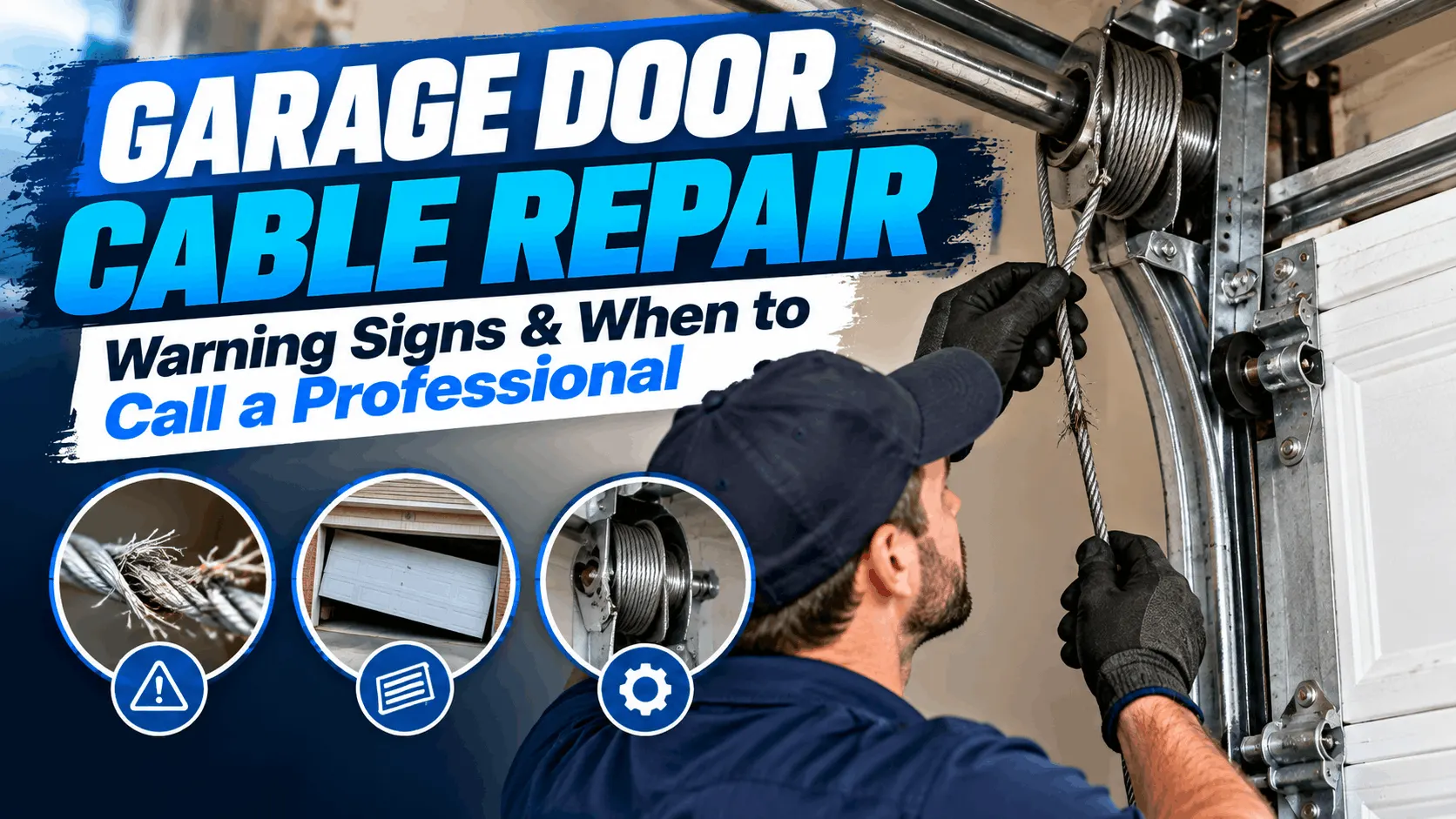

Garage Door Cable Repair: Warning Signs and When to Call a Professional
Garage door cables play an important role in helping your garage door open and close safely. When a cable becomes frayed, loose, or breaks completely, the door may become uneven, get stuck, or stop operating altogether. Knowing when you need garage door cable repair can help you recognize a potentially dangerous problem before it causes further damage.
Garage door cables work alongside the spring system to support the door’s movement. Because these components operate under significant tension, a damaged cable is not a routine DIY repair. If you notice visible cable damage or unusual door movement, stop operating the door and arrange a professional inspection.
In this guide, we explain the warning signs of damaged garage door cables, why cables fail, what happens during professional repair, and when you should call a technician.
What Do Garage Door Cables Do?
Garage door cables are part of the lifting system that helps the door move in a controlled and balanced manner. They work with the springs, drums or pulleys, and other hardware to support the door’s weight during opening and closing.
Most residential garage doors use one of two general cable arrangements, depending on their spring system.
Torsion spring cables work with a torsion spring mounted above the garage door. The cables typically attach near the bottom corners of the door and wind around drums as the door moves.
Extension spring cables are used with extension spring systems, where springs stretch along the sides of the horizontal tracks. The cable arrangement helps transfer force as the door operates.
The exact configuration varies by garage door design. In either system, damaged or incorrectly positioned cables can affect the door’s balance and movement.
7 Warning Signs You Need Garage Door Cable Repair
Cable problems are not always obvious at first. However, certain changes in the door’s appearance or operation may indicate that the lifting system needs professional attention.
1. Your Garage Door Looks Crooked
One of the clearest warning signs is a garage door that sits unevenly in the opening. One side may appear lower than the other, particularly when the door starts moving.
This can happen when a cable breaks, slips off its drum, or loses its proper position. The problem may also involve a spring, track, roller, or another lifting component.
Do not attempt to level the door by pulling on the cables or adjusting the hardware. Stop operating the system and arrange an inspection.
2. A Garage Door Cable Looks Frayed
Garage door cables are made from multiple strands of metal wire. Over time, friction, corrosion, repeated movement, or misalignment can damage those strands.
Visible warning signs may include:
- Broken or separated wire strands.
- Rust or corrosion along the cable.
- A cable that appears stretched or damaged.
- Loose sections hanging near the door’s hardware.
Even if the door still operates, visible cable damage should not be ignored. A weakened cable can fail without warning, so avoid running the door until it has been inspected.
3. The Garage Door Will Not Open
If your garage door refuses to open, a broken cable may be one possible cause. When a cable fails, the door may become jammed or lose the balanced movement needed for normal operation.
However, a door that will not open can also indicate a broken spring, an opener problem, a locked door, or an obstruction.
Avoid repeatedly pressing the opener button in an attempt to force movement. Doing so may place additional strain on the opener and other components.
4. The Door Stops Partway Through Its Movement
A garage door that rises only a few inches, stops unexpectedly, or moves unevenly may have a problem with its cable or spring system.
The opener may detect excessive resistance and stop operating, but the underlying cause can vary. A damaged track, worn roller, broken spring, or other mechanical issue can produce similar symptoms.
If the door suddenly changes how it moves, stop using it until the cause is identified.
5. You Hear a Sudden Bang or Unusual Mechanical Noise
A loud bang from the garage may indicate that a spring has broken, although other mechanical problems can also create sudden noises.
If the door becomes crooked, will not open, or has visible cable damage after the sound, treat the situation as a potential lifting-system failure.
Do not approach the cable assembly to investigate closely or try to move the door manually. Keep people away from the opening and arrange professional service.
6. The Garage Door Closes Unevenly or Slams Shut
Garage doors should move in a controlled manner. If the door drops quickly, closes unevenly, or appears to lose support, a cable or spring problem may be involved.
A damaged lifting system can make a heavy door unstable. Continuing to operate it can increase the risk of injury or property damage.
Do not try to catch, hold, or force the door into position. Keep the area clear and contact a qualified garage door technician.
7. A Cable Has Come Off Its Drum or Pulley
A cable that appears loose or has slipped out of its normal position is another serious warning sign. It may be caused by a broken cable, incorrect tension, a door that has become unbalanced, or a problem with the drum or related hardware.
Repositioning the cable without addressing the underlying cause can lead to another failure. The door may also be carrying uneven loads that make the situation unsafe.
Leave the cable and connected hardware untouched until a professional can inspect the system.
Why Do Garage Door Cables Break?
Garage door cables experience repeated movement and mechanical stress. Several factors can contribute to wear or failure.
Normal Wear and Tear
Every opening and closing cycle places stress on the lifting system. Over time, repeated use can weaken cable strands, especially when the door operates frequently.
Regular inspections can help identify visible deterioration before a cable fails completely.
Rust and Corrosion
Moisture and exposure to corrosive conditions can weaken metal cables. Rust may develop gradually, making the cable more vulnerable to damage during normal operation.
If corrosion is visible, a technician can assess whether the cable and nearby hardware remain suitable for use.
Misaligned Tracks or Hardware
When tracks, rollers, drums, or other components are misaligned, the cable may not travel along its intended path. This can create friction, uneven loading, and premature wear.
Replacing the cable without correcting the underlying alignment problem may not provide a lasting solution.
Broken or Worn Springs
Garage door springs help counterbalance the door’s weight. If a spring breaks or stops providing the necessary support, the cables and other components may experience abnormal loads.
A cable failure should therefore prompt an inspection of the complete lifting system rather than an isolated replacement without further checks.
Incorrect Previous Repairs
A cable that was incorrectly sized, routed, or installed may not operate properly. Problems with the drums, spring configuration, or door balance can also affect cable performance.
Professional diagnosis helps identify the underlying issue and determine which components need attention.
Is It Safe to Open a Garage Door With a Broken Cable?
No. You should not operate a garage door when you suspect a broken, frayed, or displaced cable.
A damaged cable can leave the door uneven or unstable. Operating the opener may worsen the damage, while manually lifting the door can expose you to the weight of an improperly supported system.
If you suspect cable damage:
- Stop using the garage door opener.
- Keep children, pets, and other people away from the door.
- Do not pull on loose cables or touch the spring assembly.
- Do not attempt to lift, lower, or balance the door manually.
- Arrange professional garage door service.
If a vehicle is trapped inside, do not risk operating an unstable door to retrieve it. Ask the technician about safe access options.
Can You Repair Garage Door Cables Yourself?
Garage door cable repair is not a suitable DIY task for most property owners. Cables work with springs and other components that can store substantial mechanical energy, even when the door is stationary.
Attempting to remove or reposition a cable without the correct training and equipment can result in serious injury. The door may also fall, shift suddenly, or damage nearby hardware.
You can safely observe the door from a distance and note visible symptoms, such as uneven movement or a loose cable. However, do not touch the damaged components, loosen brackets, adjust spring tension, or attempt to reconnect the cable.
For a broader understanding of routine inspections, read our guide on how often garage door maintenance is needed.
What Happens During Professional Garage Door Cable Repair?
The exact repair process depends on the door design and the condition of the lifting system. A professional technician typically begins by evaluating the problem and making sure the door can be handled safely.
Step 1: Inspect the Door and Lifting System
The technician examines the cables, springs, drums or pulleys, rollers, tracks, and related hardware. This helps determine whether the cable has broken, slipped out of position, or suffered wear because of another mechanical issue.
Step 2: Identify the Cause of the Failure
Cable damage may be a symptom of a wider problem. The technician checks for issues such as worn components, corrosion, misalignment, spring failure, or incorrect cable routing.
Identifying the cause is important because replacing the cable alone may not resolve the problem.
Step 3: Replace or Repair the Affected Components
Depending on the damage, the technician may replace the affected cable or recommend additional work on related components. The correct cable specification and installation procedure depend on the door’s design.
Any work involving spring tension and cable positioning should be performed with appropriate tools and safety procedures.
Step 4: Check Door Balance and Movement
After the repair, the technician checks the lifting system, door alignment, and operation. The opener and safety features may also need to be assessed to confirm that the complete system functions as intended.
The door should not be returned to normal use until the technician determines that it is safe to operate.
How Much Does Garage Door Cable Repair Cost?
The cost of garage door cable repair depends on the cable type, the extent of the damage, the condition of the related hardware, and the complexity of the repair.
A straightforward cable replacement may cost less than a repair involving damaged drums, spring components, track alignment, or other parts of the lifting system. Emergency service requirements and the time needed to complete the work can also affect the final estimate.
Before approving a repair, ask for a written estimate that explains the identified problem, recommended work, parts, labor, and any additional service charges.
For more detail on the factors that affect pricing, read our guide to garage door cable repair costs.
Avoid choosing a repair based only on the lowest quoted amount. The priority should be correct diagnosis, suitable replacement components, and safe operation after the work is complete.
How Can You Help Prevent Garage Door Cable Problems?
Although cables naturally wear over time, routine attention to the garage door system can help identify problems earlier.
Schedule regular inspections. Have the cables, springs, drums, rollers, and tracks checked according to the manufacturer’s recommendations and the system’s usage.
Pay attention to changes. Uneven movement, new mechanical noises, or visible cable deterioration should be investigated rather than ignored.
Keep the operating area clear. Remove objects that could interfere with the door’s movement or obstruct the tracks.
Avoid forcing the door. If the door becomes stuck or moves unevenly, stop operating it rather than repeatedly activating the opener.
Arrange professional maintenance. A technician can identify wear, alignment issues, and other problems that may not be obvious during everyday use.
Maintenance cannot eliminate every failure, but identifying developing problems may help prevent unexpected breakdowns.
When Should You Call a Professional?
Contact a garage door technician as soon as you notice a damaged cable, an uneven door, a cable that has come off its drum, or a door that suddenly becomes difficult to operate.
You should also arrange an inspection after a loud bang followed by a change in door movement, or when the door drops unexpectedly during closing.
If the opener runs but the door does not move, the cause may involve a cable, spring, or another mechanical component. Our guide to why a garage door motor runs but the door does not move explains other possible causes.
Do not continue troubleshooting if the door is unstable or the lifting system appears damaged. Professional diagnosis can help identify the fault and determine the appropriate repair.
For service information and assistance with garage door problems, visit Level Up Garage Door Pros.
Final Thoughts
Garage door cables help support safe, balanced door movement, so visible damage should never be ignored. Frayed wires, crooked movement, a cable that has slipped off its drum, or a door that suddenly stops operating can all indicate a problem that needs professional attention.
If you suspect cable failure, stop using the door, keep people away from the area, and avoid touching the cable or spring assembly. A qualified technician can inspect the complete lifting system, identify the cause, and determine whether cable replacement or additional repairs are necessary.
Timely attention can help prevent further mechanical damage and restore safe, reliable garage door operation.
Garage Door Cable Repair FAQs
1. How do I know if my garage door cable is broken?
Common signs include a crooked door, visible fraying, a loose cable, uneven movement, or a door that will not open properly. These symptoms can also indicate other mechanical faults, so professional inspection is recommended.
2. Can I open my garage door if a cable is broken?
You should not operate a garage door with a suspected broken cable. The door may become unstable or move unexpectedly, and using the opener can worsen the damage. Keep the area clear and arrange professional service.
3. Should both garage door cables be replaced at the same time?
It depends on the condition of both cables and the manufacturer’s recommendations. A technician can inspect both sides and advise whether replacing one cable or both is appropriate based on wear, compatibility, and the condition of the lifting system.
4. What causes garage door cables to come off the drum?
Possible causes include a broken spring, an unbalanced door, misaligned components, incorrect cable tension, or a problem with the drum. The underlying cause should be identified before the cable is repositioned or replaced.
5. How long does garage door cable repair take?
The time required depends on the door configuration, the type of cable, and whether other components are damaged. A technician can provide a more accurate estimate after inspecting the system and identifying the necessary work.