
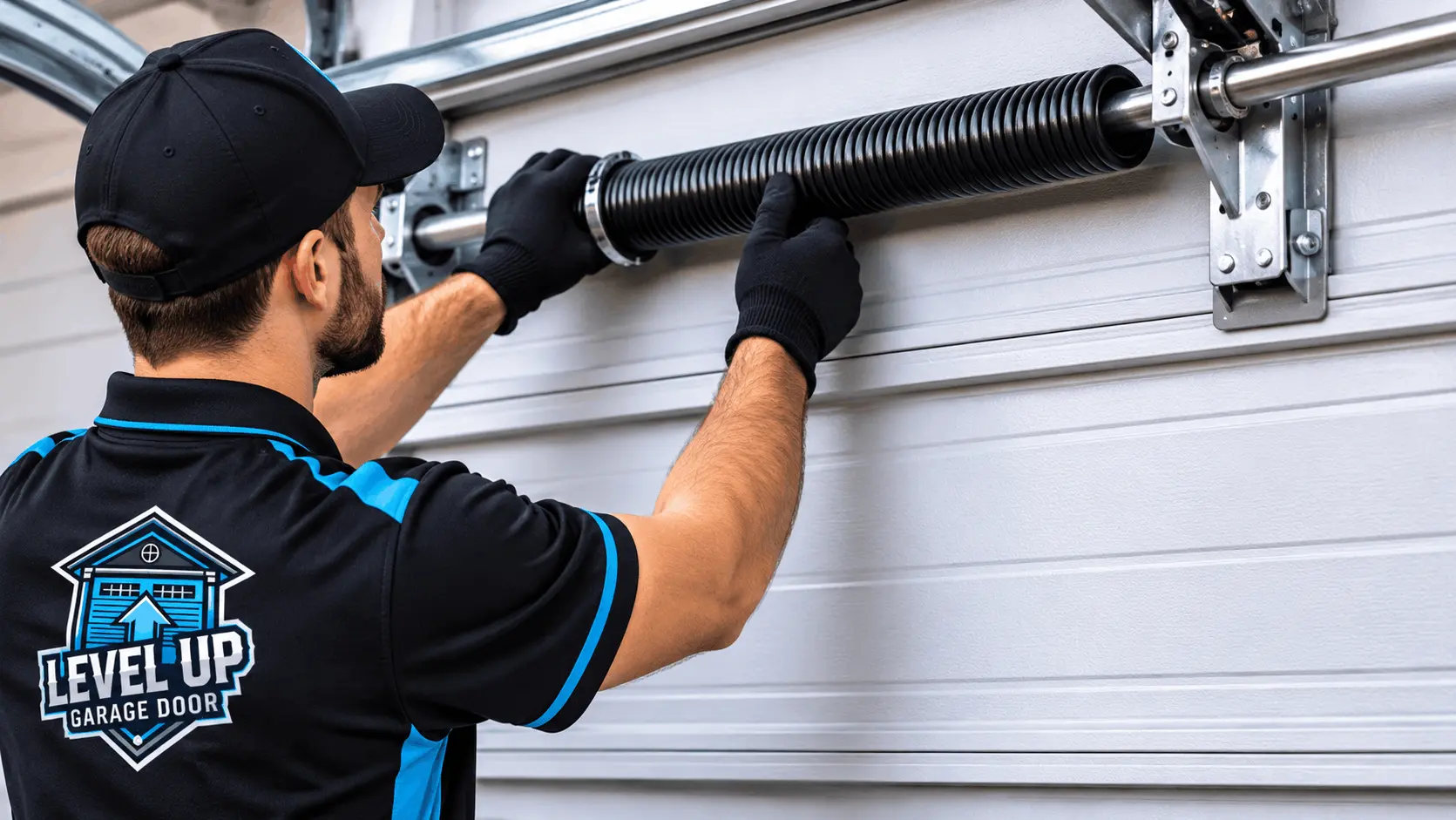

Garage Door Spring Replacement Cost: What Affects the Price
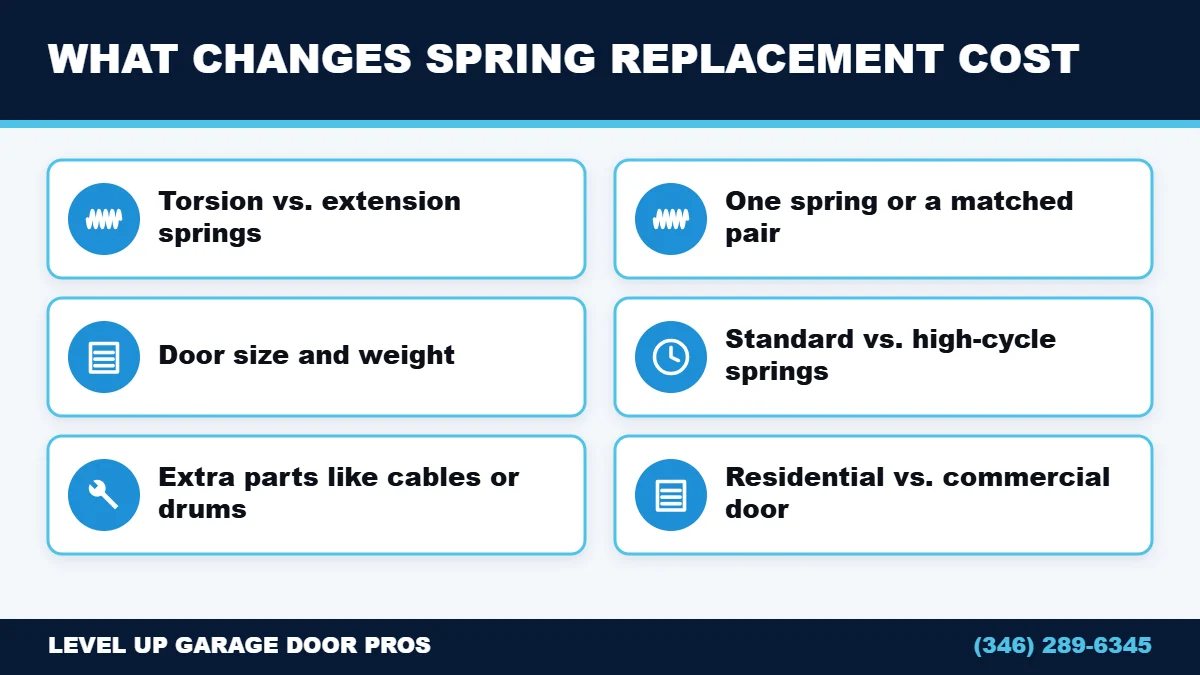
Replacing garage door springs usually costs a few hundred dollars, not thousands. National cost guides such as HomeGuide put a single torsion spring replacement at roughly $140 to $270 installed and a pair at about $200 to $350, while extension springs run somewhat less. The final price depends on the spring type, how many springs your door uses, the door’s weight, whether you choose standard or high-cycle springs, and whether cables, drums, or bearings also need attention. A technician can only give an exact number after measuring the existing springs and checking the door.
Most people find out about spring replacement the hard way: a loud bang from the garage, then a door that will not open. The good news is that a broken spring is one of the most common and predictable garage door repairs. Knowing what goes into the price makes it easier to compare quotes and spot one that does not add up. When the time comes, our spring repair and replacement team can measure and match springs to your door.
What Is the Typical Cost of Garage Door Spring Replacement?
The ranges below come from national pricing data and include parts and labor. Local pricing in League City can be higher or lower depending on the door and how much extra hardware is involved.
| Spring job | Typical installed cost (national) |
|---|---|
| Single torsion spring | $140 – $270 |
| Pair of torsion springs | $200 – $350 |
| Single extension spring | about $120 – $160 |
| Pair of extension springs | about $160 – $200 |
| Torsion spring part only | $30 – $100 each |
| Extension spring part only | $20 – $50 each |
The parts themselves are inexpensive. Most of what you pay for is the technician’s time, the tools needed to wind springs safely, and the experience to size them correctly. That is also why a very low phone quote that does not mention spring size or count deserves a follow-up question.
Why Do Torsion and Extension Springs Cost Different Amounts?
Torsion springs sit on a shaft above the door opening and twist to store energy. Extension springs run along the horizontal tracks and stretch as the door closes. Torsion systems are more common on newer doors, lift more smoothly, and generally last longer, but the springs are larger and take more skill to wind, so they cost more to replace. Extension systems are found on older and lighter doors and should always have safety cables running through the springs. Our comparison of torsion vs. extension springs explains how each system works.
Should You Replace One Spring or Both?
If your door has two springs and only one broke, it is tempting to replace just that one. In most cases, technicians recommend replacing both. The two springs were installed at the same time and have gone through the same number of cycles, so the survivor is usually close to failing too. Replacing the pair keeps the door balanced and avoids paying for a second service call a few months later. Our guide to one-spring vs. two-spring doors covers when a single spring setup makes sense.
How Does Spring Cycle Life Affect the Price?
Springs are rated by cycles, with one cycle being one full open and one full close. A standard torsion spring is commonly rated around 10,000 cycles, which works out to several years for a door used three or four times a day. Industry pricing guides list typical torsion spring life at 7 to 14 years, or roughly 10,000 to 20,000 cycles, and extension springs at about 4 to 10 years.
High-cycle springs use heavier wire or longer coils to last longer. They cost more upfront, but for a busy household, a rental property, or a door that doubles as the main entrance, they can mean fewer replacements over the life of the door. Commercial doors that open dozens of times a day often use high-cycle springs as a matter of course. For more on lifespan, see how long garage door springs last.
What Information Does a Technician Need to Size a Spring?
Springs are not one-size-fits-all. To match the door’s weight, a technician measures or confirms:
- Wire size: The thickness of the spring wire, which largely determines lifting strength.
- Inside diameter: Common residential sizes are 1-3/4 and 2 inches.
- Length: The length of the coil when it is not wound.
- Wind direction: Left-wound and right-wound springs are mounted on opposite sides of the center bracket.
- Door weight and height: These determine how much lift the springs need to provide.
Getting any of these wrong leaves the door unbalanced, which makes the opener work harder and can shorten its life. Our garage door spring size chart shows how these measurements fit together.
What Other Repairs Can Add to the Bill?
A spring rarely breaks in isolation. When it lets go, the sudden change in tension can damage parts nearby. During a spring replacement, a careful technician will check:
- Lift cables for fraying, kinks, or rust.
- Cable drums for cracks or worn grooves.
- End bearing plates and the center bearing.
- Rollers and hinges that may have been stressed when the door dropped.
- The opener, which may have strained trying to lift an unbalanced door.
It is normal for a quote to include new cables along with the springs, especially on doors more than a few years old. What matters is that the technician shows you the worn part and explains why it should be replaced.
How Should You Compare Spring Replacement Quotes?
Two quotes for “spring replacement” can describe very different jobs. Before you choose, ask each company the same questions so you are comparing like for like:
- How many springs will be replaced, and what size and cycle rating are they?
- Are new cables, drums, or bearings included, or priced separately?
- Is the service call or diagnostic fee included in the total?
- What warranty covers the springs, and what covers the labor?
- Will the technician check balance and adjust the opener after the replacement?
A slightly higher quote that includes matched high-cycle springs, new cables, and a clear warranty is often better value than the lowest number on the phone. Ask for the price in writing before work starts.
Can You Save Money by Replacing Springs Yourself?
Spring parts are cheap, so DIY can look attractive. It is also one of the riskiest jobs in garage door repair. A wound torsion spring stores enough energy to cause serious injury if a winding bar slips, and an incorrectly sized spring can make the door fall or shoot up unexpectedly. The industry association DASMA advises that springs and related components should be adjusted only by trained technicians. Our article on the dangers of garage door springs goes through the specific risks.
How Can You Tell a Spring Is About to Fail?
- The door feels heavy when you lift it by hand with the opener disconnected.
- The door will not stay in place when lifted halfway.
- One side of the door rises faster than the other.
- You can see stretched, rusted, or separated coils.
- The opener strains or the door moves slower than it used to.
On the Gulf Coast, rust is a common accelerator. Humidity and salt air corrode the coils, which adds friction and weakens the steel. A light coat of garage door lubricant on the springs during routine maintenance helps slow that down.
Garage Door Spring Replacement in League City
At Level Up Garage Door Pros, we measure your existing springs, confirm the door’s weight, and recommend standard or high-cycle springs based on how often the door is used. We also inspect the cables, drums, and bearings and give you a written price before any work begins. We replace springs on residential and commercial doors across League City, Alvin, and nearby communities.
Frequently Asked Questions
How much does it cost to replace a garage door spring?
National pricing guides put a single torsion spring replacement at roughly $140 to $270 installed and a pair at about $200 to $350. The final price depends on spring size, the number of springs, door weight, and any extra parts needed.
Should both garage door springs be replaced at the same time?
Usually, yes. Both springs have gone through the same number of cycles, so the second one is often close to failing. Replacing both keeps the door balanced and avoids a second service call.
How long do garage door springs last?
Standard torsion springs are commonly rated around 10,000 cycles, and pricing guides list typical torsion spring life at about 7 to 14 years. High-cycle springs are designed to last longer.
Are high-cycle springs worth it?
They can be worth it for doors used many times a day. They cost more upfront but can reduce how often springs need to be replaced.
Is it safe to open a garage door with a broken spring?
No. The door may be very heavy or drop unexpectedly, and the opener can be damaged trying to lift it. Leave the door closed and call a technician.